Monday, 23 February 2009

Review: BBC Wildlife Magazine March 2009 Issue

If you're a regular follower of GiantsOrbiting and its themes, I hope you are also aware of the spectacular periodical embracing all things relating to Natural History that is, BBC Wildlife Magazine.
BBC Wildlife Magazine has moved from strength to strength since it was founded in 1963 as Animals Magazine. Amongst its array of impressive advisors are included David Attenborough (Planet Earth, Nature’s Great Events), Jane Goodall (The Jane Goodall Institute), Simon King (Big Cat Live) and Stephen Moss (Springwatch and A Guide to Garden Birds).

The BBC Wildlife Magazine March 2009 issue is, true to form, another wonderful exploration into wildlife behaviour and imagery; from stunning freeze-frame photography to insightful ideas for your bookshelf and fascinating examination of behaviour. In this issue discover the dynamics of a great white shark attack (Image: Chris Fallows), learn how to distinguish between many different common caterpillars, ascertain how to trap slugs using beer and take note of the best wildlife television offerings in March.

When you have contained your excitement and settled down to read, turn to page 68 for a wonderful guide to attracting birds to your garden (Image: Chris O'Reilly). Written by Steve Harris of Bristol University this article is one of many found in this issue that gives you advice on how to engage with nature where you are!

This is, in my opinion a hot topic of the moment. The ever popular Springwatch and Autumnwatch series have been great catalysts for focussing the public eye back on our British Wildlife. The BBC (amongst other production groups) is now churning out fantastic programmes such as It’s not Easy Being Green and Wild About Your Garden; programmes designed to help you bring wildlife to your doorstep and create a symbiotic relationship with the environment. And you don’t need a huge garden to do it!
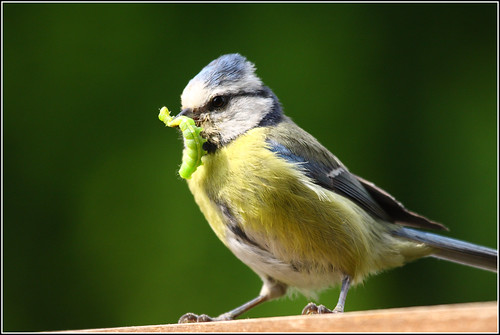
How to...Attract birds to your garden by Steve Harris describes how to source your seeds, make birds feel at home and monitor the changes you’ve instigated in your new bird haven. Birds, besides being beautiful to watch and pleasant to listen to, are also helpful pollinators and pest-deterrents (Image: David F) and you may find that their presence improves your garden flora.
It is important that your garden meets the needs of the birds throughout the year if you are to encourage them to be regular visitors, but this can be compensated for by putting fat blocks out during the winter, buying substandard cast-off apples for when your trees are out of fruit and planting a range of seasonal shrubs and trees.
And it’s not just food that birds require. We all know the excitement of seeing birds collect for their young in spring, so put out a nestbox now while the birds are seeking shelter and you may find yourself witnessing the young’s first flight in the summer.

Some birds prefer to forage on the ground and some at the birdfeeder but all are vulnerable to predators. Almost all animals must find a balance between feeding and being vigilant against attack whilst foraging: By keeping your feeders in a position where birds can see predators such as cats or sparrowhawks (Image: Duncan Carrier) coming, you will be ensuring that your garden provides a place where birds feel safe and are sure of a good meal.
They’ve thought of everything from deterring squirrels to avoiding the spread of disease by sterilising feeders regularly. This is a comprehensive and thorough guide to attracting birds to your garden and if you turn to page 82 you’ll discover more about the birds that may soon be reaching the British shores from across the world.

In next month’s issue the BBC Wildlife team review whether Grow-Your-Own Butterfly kits actually work, and teach us skills to help us sneak up on Wildlife for a better look!
If you want a copy of BBC Wildlife magazine it will cost you £3.45 per issue. Alternatively a year’s subscription is £31.20 saving you over a pound per issue and delivery is free to the UK.

If you want to learn more about how to create a place for wildlife in your garden or near you take a look at the Breathing Places website.

Saturday, 14 February 2009

BBC News: Remarkable footage of the elusive Narwhal

A BBC team used aerial cameras to film the creatures during their epic summer migration, as they navigated through cracks in the melting Arctic sea ice.

Narwhal are sometimes called "Arctic unicorns" because of the long, spiral tusk that protrudes from their jaws.
The appendages can reach more than 2m (7ft) in length; scientists believe males use them to attract potential mates.

Narwhal: Unicorn of the Arctic
'An amazing sight'
The BBC crew headed to the Arctic in June 2008, to film the tusked animals' summer migration.

At this time of year, temperatures begin to rise above freezing and the thick sea ice starts to melt, creating a complex network of cracks that cover the white expanse.

These animals are just so completely unreal - they are like something from mythology
Justin Anderson, BBC producer

Every year, thousands of narwhal use these narrow fissures to travel thousands of kilometres, from the south of Baffin Bay to the high Arctic fjords.

But tracking these animals down is not easy.

Justin Anderson, who produced the programme, said: Even though they are quite large animals, the area we had to cover was enormous - the size of Scotland.

It is like finding a needle in a haystack.

A "dive" crew, equipped with underwater cameras, spent four weeks on the ice trying to locate the mysterious whales. But just as they caught a glimpse of them, the sea ice had become so dangerously thin that filming was forced to halt.

However, an "aerial" team arrived by helicopter to take up the mantle.

Mr Anderson explained: It took us seven days to travel to the place where the whales had been spotted [Lancaster Sound] - we were stuck by possibly the worse thing you can encounter in a helicopter in the Arctic - fog.
But then we got there, we 'lucked out'; the skies cleared and we had eight days of 24-hour summer sunshine.


Using a special mount, cameraman Simon Werry filmed the creatures from the helicopter, as the narwhal swam through the melt-water leads.

Mr Anderson said: This is the first time the narwhal migration has been filmed this way. It has been filmed from the ice, but this is the first time it has been filmed from the air.

It was an amazing sight. These animals are just so completely unreal - they are like something from mythology - and we were all just completely gobsmacked when we saw them.

Thanks to their elusive nature, narwhal can prove difficult to study and there is still much to learn about these Arctic mammals.

With such a connection to the Arctic ice, researchers are trying to establish whether narwhal will be affected by changes in the Arctic ice cover.

Dr Heide-Jorgensen has been using satellite tags, which, as well as keeping track of the whereabouts of narwhal, are also able to monitor the temperature of the waters where the whales swim.

He said: They give us the temperature profiles in the wintering grounds and we can see the temperature of the deep areas has been increasing over the past 50 years.
However, we cannot yet see any direct effects of climate change on the narwhal.


From BBC News by science reporter Rebecca Morelle

Nature's Great Events: The Great Melt is on Wednesday 11 February on BBC One at 2100 GMT

Tuesday, 3 February 2009

Darwin's Struggle: The Evolution of the Origin of Species

As many of you are aware the BBC is dedicating a series of television and radio programmes to the 200th anniversary of Charles Darwin's birth and the 150th anniversary of the publication of 'On the Origin of Species', under the title
Doubtless many of you will have watched David Attenborough's Charles Darwin and the Tree of Life on BBC1 last Sunday night at 9pm, and if not you can still catch it on the BBC iPlayer. This programme gives us a brief overview of Darwin's life's work interspersed with much library footage showing the young David Attenborough's discoveries of the same patterns in nature. It covers arguments for and against theories of natural selection and evolution, and takes us on a journey through evolution from single-celled organisms up to the top shoots of the tree of life, and all with some very snazzy graphics!

However, more fascinating, I found was the rigorous exploration of Darwin's life leading up to his great works as is conveyed through Darwin's Struggle: The Evolution of the Origin of Species.

Jeremy Bristow's production gives us a brutally accurate description of the truly tragic life Charles Darwin lead: His family touched by the tragedies of the deaths of three of his children finally causing him to lose his faith and to damn religion... The influence of his daughter Anne's death on chapter 3 of On the origin of species as he sees the face of nature stricken as her face was with the struggle to survive...
His concern for his wife Emma's fear that he will be damned to hell.

It is easy to forget, amongst visions of his great works and great voyages that Charles Darwin was a man leading a man's life with all the pressures we experience today and more. His personal growth is almost as amazing as the theories it precedes.

Darwin's Struggle unravels myths surrounding the roots of his theories, noting, for example, the overstated significance of the Beagle voyage from which his natural history collections were in fact meagre and badly classified. His true epiphanies appear to take place not in some glamourous exotic country but in the chalk banks and unmown lawns of his Kentish home. Simple experiments he conducted recording survivors and losers in the struggle for existance in patches of grass gave the strongest base to his hypotheses. He even wondered at his own children whom he considered in relation to orangutans in the zoo. His exploration of artificial selection through pigeon breeding, laws defining hive structure from bee keeping, and complexities amongst barnacles all seem to have been overlooked by the media in the past.

Terrified of the reception of his book Darwin lived through years of torment and self doubt. Losing himself in research, desperate to shield his theory from anticipated criticisms Darwin endured years of secrecy only to become distraught at the possibility of his work being undercut by that of Alfred Wallace: All my originality smashed.

Eventually Darwin published his book only highlighting the effects of his theories on species and avoiding the implications of the origins of mankind; but these implications were not lost on his close teacher and mentor Adam Sedgewick who brutally denounced his work in a devastating letter to him.

He was open to vast ridicule from religious leaders as well as devout christian scientists of the time.

Darwin's Struggle: The Evolution of the Origin of Species is a fascinating exploration of the life-long torment which lead to one of the most important theories in science today. One of the most honest portrayals of Darwin to date, I'd recommend anyone interested in his great works to watch Darwin's Struggle and learn about the true evolution of the origin of species.

You can watch Darwin's Struggle on the iPlayer until Monday the 9th February and it will also air again tonight (Tuesday 3rd) at 7.30pm on BBC4.

Darwin's Struggle was produced by Jeremy Bristow of the BBC's Natural History Unit.

Monday, 2 February 2009

David Attenborough on Charles Darwin and the Tree of Life


You can watch Charles Darwin and the Tree of Life on the BBC iPlayer until 10pm on Sunday the 18th February.

Sunday, 1 February 2009

BBC NHU position available...! (from Wildlife Film News)

After six years as Head of the BBC's Natural History Unit, Neil Nightingale is to stand down and return to programme making. Neil's first project will be a six part BBC One landmark series, Africa – a definitive television series on the greatest wildlife continent on earth.

During his time as Head of the NHU its output has gone from strength to strength, including a diverse range of natural history programmes on television, radio, online and for the cinema. The unit has constantly excelled and created a world-class reputation for ambitious and groundbreaking factual programmes that inform and entertain audiences.

Recent output from the Natural History Unit on television includes Life In Cold Blood, Planet Earth, the Saving Planet Earth season, Wild China, Big Cat Live, The Secret Life Of Elephants, Lost Land Of The Jaguar, Expedition Borneo, Springwatch, Autumnwatch, Galapagos and Natural World.

On radio, recent series include Nature, Living World, Soundscapes and a major live event, World On The Move.

Peter Salmon, Chief Creative Officer, BBC Vision, says: "Neil has made a huge contribution to the BBC’s Natural History Unit. His in-depth knowledge, passion and skill for programme making meant that he was a first-class head of the BBC's Natural History Unit. I wish him every success with his next move, to return to programme making. Thanks to Neil and his teams the NHU is at the top of its game and in great shape for the challenges that the future will bring."

Tom Archer, Controller, BBC Factual Production, BBC Vision, says: "I am thrilled that Neil will be staying within the BBC to resume his brilliant programme making career. He's been a superb head of the NHU and I am sure he will now make some world-class programmes across the BBC."

Neil Nightingale says: "I have enjoyed my time as Head of the NHU immensely. It has been a great privilege to lead the world's most innovative group of wildlife producers but now I feel is the right time to return to my first love, programme making. Africa is an ambitious project and I can't wait to get started on it."

An announcement about the new Head of the NHU will follow in due in course.

Wildlife Film News


There's many a great producer around the NHU suitable for the job... Brian Leith, Tim Martin. Any guesses?

Wednesday, 28 January 2009

Planet before Profit - Climate change films

Some of you may remember a discussion surrounding locked up rights to filming output that took place here last year.

Nalaka Gunawardene writes again about the importance of filmmakers putting planet before profit at SciDevNet:

Films and television programmes about climate change should be made freely available beyond their initial broadcast.

Films and television programmes about climate change should be designated a 'copyright free zone'.

This was the call made by broadcasters and independent film-makers at an Asian media workshop held in Tokyo last month (October).

For years, broadcasters have dutifully reported on evolving scientific and political aspects of climate change. They have also made or carried excellent documentaries analysing causes of, and solutions to, the problem. But these are often not widely available, because of tight copyright restrictions.

Limited distribution

Most media companies hang on to their products for years, sometimes long after they have recovered their full investment.

Even when film-makers or producers themselves want their creations to circulate beyond broadcasts, company policies get in the way. In large broadcast or film production companies, lawyers and accountants — not journalists or producers — decide how and where content is distributed.

It isn't just climate-related films that are locked up with copyright restrictions. Every year, hundreds of television programmes or video films — many supported by public, corporate or philanthropic funds — are made on a variety of development and conservation topics.

These are typically aired once, twice or at best a few times and then relegated to a shelf somewhere. A few may be released on DVD or adapted for online use. But the majority goes into archival 'black holes', from where they might never emerge again.

Yet most of these films have a long shelf life and could serve multiple secondary uses outside the broadcast industry.

Beyond broadcast

Communicating the need for social change is a slow, incremental process. Broadcasts can flag important issues, but real engagement happens in classrooms, training centres and other small groups where screenings stir up deeper discussions. Combining broadcast and 'narrowcast' outreach vastly increases the chances of changing people's attitudes and, ultimately, their behaviour.

But if moving images are to play a decisive role in the climate debate, television programmes and video films on the subject need to be more freely available, accessible and useable, as argued at the Tokyo workshop.

Read the entire article at SciDevNet here. Many thanks to Nalaka Gunawardene for bringing this issue to the public eye.

Wednesday, 14 January 2009

The Secret Life of Elephants


Starting tonight at 9pm on BBC1, The Secret Life of Elephants follows the ins and outs of life and indeed death in the Kenyan Samburu reserve. Followed closely by four kenyans including Iain and Saba Dougla-Hamilton, newborn Breeze will face the most vulnerable time of her life whilst three tonne Anastasia will try her hardest to avoid acquiring a new piece of jewellery.

This three part series promises to be fascinating, emotional and dramatic, not least if Saba Douglas-Hamilton's blog is anything to go by! Elephants are thought to hold many emotions to which we can relate, including love, lust, jealousy, fear and anger, all of which will play a part in tonight's programme.

The Secret Life of Elephants hopes to open the world's eyes to the amazing work of the Save The Elephants research team.

The Secret Life of Elephants will be broadcast on BBC1 at 9pm on the 14th, 21st and 28th of January, and was produced by Holly Spearing (series producer: Nigel Pope). Episodes will be available to watch on the BBC iPlayer for one week following broadcast.
You can also pre-order your DVD of The Secret Life of Elephants at the BBCShop online.

Monday, 5 January 2009

Radio 4's Darwin: In our Time

In celebration of the 200th anniversary of the birth of Charles Darwin, and the 150th anniversary of the publication of 'On the Origin of Species', the BBC is airing a season of landmark TV and radio programmes under the title Darwin: The genius of evolution.


This week Radio 4 presents the series Darwin: In our Time which began today with the first programme On the Origin of Charles Darwin. Melvyn Bragg talks to Darwin biographer Jim Moore, UCL geneticist Steve Jones and Christ's College fellow David Norman, as well as college librarian Colin Higgins; to uncover Darwin's personal evolution from childhood through to Cambridge graduate.


The first in this series leads us through Darwin's troubled upbringing as the fifth child of a large and well-off family, to his escape from Edinburgh University after failing a medical degree, and on to his life at Cambridge training to be a clergyman, where he would be seemingly unimpressive at his studies.

Darwin entered Cambridge with every intention of becoming a clergyman of the Church of England, which would necessitate his signing of the 39 articles of the Church in order to graduate. Biology at this time was not much more than stamp collecting, and Darwin's beetle collection was one he took great pride in.
We learn of Darwin's development from mere beetle-watcher to entemologist to theoreticist; all while he takes on University life: tapping into his father's wallet, running up bills and skipping lectures to pursue vices such as drinking and shooting.

The Christ's College library gives us insight into his personal growth through a vast collection of correspondances between Darwin and his close friend and cousin William Darwin Fox. We hear too of Darwin's university role-model, Professor Henslow, who introduced Darwin to plants and “Ecology” and opened his eyes to the presence of patterns in nature.

The programme also takes a geographical perspective leading the presenters and listener around the common haunts of Darwin's student life.

The Darwin: In our Time series promises to be a fascinating journey through what was a very difficult time for such revolutionary ideas.

The next in this series will see Darwin journey to South America on the Beagle voyage and will be broadcast on Radio 4 at 9am on Tuesday 6th January.

You can listen to Darwin: In Our Time: On the Origin of Charles Darwin online with the BBC iPlayer until next Monday, and further programmes in the series will also be available on the iPlayer over the next few weeks.

One to watch: Darwin's Struggle: The Evolution of the Origin of Species will be showing on BBC4 at 9pm on 2nd February. Produced by Jeremy Bristow of the BBC Natural History Unit.

Tuesday, 16 December 2008

Breathing Places Christmas message


Ok so this is a bit silly but the Breathing Places message is a genuine one.
Do One Thing for your local wildlife this Christmas!

Saturday, 29 November 2008

Natural World: Cheeky Monkeys


You simply have to get onto the iPlayer and watch Natural World's Cheeky Monkey episode Clever Monkeys!

Narrated by David Attenborough, this Natural World gem intends to explore how monkeys throughout the world should challenge our perceptions of what it is to be human.
From our ability to hold images in our minds to our capacity for language, it seems that somewhere in the world one of our cousins will have mastered the same!

Some astonishing stories have been dug up here from the Marmosets farming sap from trees to the White-faced capuchins cracking clams open and using their tails as sponges to soak up rainwater from inside tree trunks.

There is also some world class footage from close-up facial expressions to stunning wide angle views, and the first few minutes' editing and music build a wonderful cheeky start to the programme.

I do have to note that there are occasional over-anthropomorphic assumptions made. I did find myself grinding my teeth as some very selective editing suggested that a group of macaques were feeling sad at the loss of their leader, and I found myself very grumpy with Mr. Attenborough when he suggested that a "clever" monkey had mastered the lie when in fact he was most likely merely mastering a situation of cause and effect.


No great conclusions should be made about monkey "intelligence" from the programme but it is fantastically researched and really delightful to watch. A valuable addition to the NHU archives, so long as the BBC sell it for what it is: a lovely collection of interesting behaviours and a glimpse of how some of our great accomplishments as humans might have began.

Natural World's Clever Monkeys, first broadcast on BBC2, is available to view online until Tues December 16th and was co-produced by the BBC and Thirteen/WNET New York.

Related posts: Oceans Outrage, Killer Whales in the UK?, Wildscreen

Monday, 24 November 2008

Wildscreen Campaign Award Winner: Rethink the Shark


Another fantastic clip brought to my attention by The Nature Watch.

Saturday, 22 November 2008

Oceans Outrage: viewers are "patronised" and "pissed off" by the new mega series!


A recent glance at one of my favourite blogs The Nature Watch showed that some bloggers are overwhelmingly unhappy with the BBC's latest mega-series Oceans.

Described as "a classy documentary" by the Sunday Telegraph, "a shimmering series" by The Sun and "top aqua totty!" by Radio 4, Oceans promised to take us on an exploration of "some of the planet's most challenging environments" following "intrepid adventurers", but after reading the comments on the Nature Watch's spiel you might not be so sure!

Former newspaper journalist blogger Lunartalks gives a wholeheartedly different view of the series. Lunartalks reviews the series with a refreshingly colloquial yet intelligent and rigidly honest tone and I'd thoroughly recommend giving it a read! From the viewpoint of one with a "passionate" love of the Yorkshire coastline it would appear that the BBC has seriously wronged locals by hollywoodising their home environments with patronising and irrelevant stories. Lunartalks notes that his home-stretch of coast is malresearched; its gripping heritage of "James Cook, villages sliding into the sea on storm blasted nights, smuggling, ...the first German plane shot down over Britain... sunken u-boats,... Jurassic fossils, Jack Lammiman,...Dracula, ... Viking invasion, ... tales that old fisherman can tell of rowing off a lee shore for hours until their bones showed through their palms" and many many more, all neglected in the series.

And it isn't just a single blogger insulted by the "self loving" presenters: Karen James (beagle blogger), is furious at the hypocrisy of "presenters trying to pose adventurously on the bow of a big fat diesel spewing thing cruising at top speed across the waves" whilst preaching about climate change; Kevin Z (marine researcher) labels it an indicator of the BBC's "decline in quality"; and nature forums aren't much better. Birdforum reader ghostrider objects to the "dumbed-down" information, the use of the phrase "ground-breaking photography" to describe "fishing for squid and then diving with a camera" and the progression towards "I'm a Celebrity diver, get me on camera"! Adey Baker notes that "this type of programme (does) try to make heroes out of people doing their job rather than the results of that job" and deals too much with "all the problems of the members of the group" rather than "creatures of the deep".We all know reality TV is a hit but should we have to expect it from the blue-chip-famous BBC natural history unit?
When Lunartalks describes "the gender-balanced, UK ethnically selected team of presenters", I can't help but sense a line-up for Big Brother, and even internet writers who enjoyed the series have noted that having "super good looking people in it..helped".

On the other side of the coin Peewit (forum writer) found the presentation "heart-felt" and "insightful" and commends the 'adventurers' for "risking their lives...for filming purposes"; and as with almost any BBC NHU output there are tv reviewers suggesting that "if your sea legs are steady and strong, (Oceans) is your idea of viewing bliss".

All-in-all opinions are obviously personal and you should foster some of your own by watching Oceans online. From my viewpoint the reality-tv style of programming which we are seeing more and more is not attractive when thrust into the natural history world. For example Pacific Abyss is a disgustingly over-sensational programme described rightly by The Mirror as "abyssmal"(!)
Anna Lowman (TV scoop writer) notes that this style of programming has become "a trend ever since Planet Earth started having those ten "making of" minutes at the end of the programme" and believes it "takes the magic away".
I must finish with her eloquent statement that these programmes risk "trying to be too many things to too many people - extreme sports junkies, environmentalists, history lovers, wildlife enthusiasts - and in doing so, don't really satisfy any of their intended audiences."

Related posts: Wild:Killer Whales in the UK?, Pushing it too far..., Life in Cold Blood faking it

Wednesday, 19 November 2008

Will Work for Nuts from the Wildscreen Film Festival

Wildscreen Film Festival nominee "Will Work for Nuts" was high on my list of must-sees since I found out the reason for the presence of a two foot peanut at the Panda awards!

Will Work for Nuts was a collaborative effort from Tigress Productions based in Bristol, Five UK and BDH. From programme to programme we see animals' natural abilities put to the test in creative, fun and exciting ways.

The first episode documented the first bee race ever followed shortly by goldfish football (You may need to install the latest version of Flash to view this clip).


Presenters Lloyd Buck, Matt Thompson and James Cooper are querky michievous animal-lovers out to show what their favourite furry, feathery and otherwise fabulous friends can do.

Lloyd, the cheeky Essex lad, is a bird trainer who considers himself the equivalent of a mate to his pet golden eagle and enjoys putting his phenomenally fast falcons to the test.


Joker Matt has a background in wildlife tv production and seems to prefer the hard way when it comes to up-close encounters with bird-feeders disguising himself as a bin to get a camera-phone shot of a bluetit.

James is a mischievous Techy who finds ingenious ways to tackle the wild including inventing a self-taking bird feeder cam and creating digitally altered human bird song.


Episodes tested the reaction times of the fastest bird on the planet, the peregrine falcon, the possibility of birdwatching using your mobile phone and the bizarre concept of an eagle lie detector. However, my favourite and one of the most ingenious ideas was that of human birdsong. The boys slowed down a recording of wren song by 1000 times to approximately human voice frequency. They then sang along to this recording their efforts, and sped it back up to bird frequency...result? Human birdsong! No experiment is complete without a realistic test: they crept up on a hide full of seasoned birdwatchers and played their effort. Amazingly the birdwatchers identified the song as that of a wren - Brilliant!


You can find out more about Will Work for Nuts on the BDH website and Five's blog. There are currently no plans to schedule repeats but some Will Work for Nuts clips are available on youtube if you missed it.

You can also buy the show's book at Amazon.com for just a fiver!
And watch Matt's hilarious response to being a runner-up at the Pandas on youtube.

Related posts: Wildscreen 2008 Panda Awards

Thursday, 13 November 2008

Wildlife Presenter Wanted for New Series

Craterlion Productions are looking for a passionate, camera-friendly individual who has dedicated their lives to preserving, learning and educating, for wildlife and habitat. They are looking to attach the right host to this concept; you will be the face of the series so we need someone who has the charm, personality, and confidence to carry a series.

Requirements:

-age between the range of 23-45
-male or female, any race
-background in wildlife/biology, etc.
-send us a VIDEO (link or uploaded) reel of who you are and why you would be the perfect host for this series
-without any video footage you WILL be ignored
-ability to travel/current passport

Please mail links to wildlife@craterlionproductions.com

Tuesday, 28 October 2008

Autumnwatch 2008


It's started! Love-him-or-hate-him Bill Oddie and glowing BBC icon Kate Humble returned to our screens last night for the opening of Autumnwatch 2008.

Having just had one of the coldest Summers in years, some of us may feel cheated at how soon Autumn seems to have arrived, but the Autumnwatch team have already been hard at work for weeks preparing our new Autumn adventures for the screen!

Based at Brownsea Island, home to one of the last groups of red squirrels in the British Isles, Autumnwatch 2008 is promising to take us on a journey through the season's true wild mysteries unravelling stories on land and beneath the surface fo the oceans around Britain. For a start we'll be following the Autumnwatch squirrel challenge as the crew attempts to find out if the Red Squirrel can compete with the grey's famous agility and cunning.

Simon King has returned to us from the Masai Mara to take on the much less dangerous challenge of examining the rutting and lekking behaviours of the beautiful fallow deer population at Petworth. Last night we learned that a single male may mate with up to 15% of the females in the population. Using the Big Cat Live technology we saw images of the deer at night from the infra-red cams and followed them into the dawn to examine how and why a single male can be so successful! Simon tells us it all comes down to stamina(!) and we should stay tuned for more from Britains beautiful deer populations.

The lovely Gordon Buchanan has been struggling his way out to the Farne Islands to check up on the grey seals out there whose freshly born pups are learning to suckle and of course to cope with the elements. These pups will have to become completely independent in just three weeks in order to cope with the loss of thir parents to the annual migrations. Autumnwatch are promising us serious drama from the grey seal populations where the pups are at the most vulnerable time of their lives.

Another exciting first, we'll be seeing reptilian behaviours this Autumnwatch as Dorset is home to all six of the UKs native reptiles...and some invaders!

TUNE IN TONIGHT for a look at the famous Hannibal the cannibal barn owl as well as some amazing slow motion footage from the bird feeder cameras.

If you want to get involved in Autumnwatch check out the Autumnwatch website, at which you can upload your own footage of Autumnal behaviours, chat on the messageboards about your sightings and even contribute your photos to their Flickr group.
Missed an episode?! You can catch last night's Autumnwatch now on the BBC iPlayer.

Saturday, 25 October 2008

Not for the faint-hearted: China's Killer Zoos news report


This report won the Wildscreen 2008 News award.
The judges stated that this was a report everyone should see.

Friday, 24 October 2008

Wildscreen Volunteering Uncut: Day 5

Thursday
The final day of Wildscreen

Speedpitching
A new format for Wildscreen, Speedpitching gives filmmakers the opportunity to attempt to get their ideas commissioned by some of the best in the industry.
Understandably this can be a difficult and intimidating process for pitchers when they have only three minutes to present their ideas to commissioners such as Tim Martin the series editor of Natural World, Shannon Malone from National Geographic, David Glover from C4 and Animal Planet International's director of programming Mark Wild. However, the opportunity to pitch to commissioners that would usually be difficult to get hold of, and in an environment where critiques and advice are freely given, is one not to be taken lightly.
A pitch must always be commissioner specific - a hurdle at which many pitches can fall by the wayside - but with such a valuable resource available, many Wildscreen delegates found themselves adapting their pitches on the spot to have the chance to push their ideas at other exciting commissioners.

Videotheque
Throughout the week delegates have access to all the Wildscreen Film Festival entrants at the videotheque. This is open every day allowing delegates to drop in at any time, with the biggest rush hours between workshops and talks. In previous years DVD players have been used but this year Wildscreen has upgraded its Videotheque to use an online library for much easier viewing: a major benefit being that more than one delegate can view a single programme at once!
The final day of Wildscreen sees the videotheque packed with delegates hoping to see the winning programmes which were announced at the Pandas the night before.

Wildscreen's final day is busy everywhere with queues throughout the Watershed for the closing talks, debates and screenings.

The Watershed on Bristol's waterfront has yet again been the perfect host and is well worth a visit on Friday for the screenings of the Panda Award winners...
Alastair Fothergill at Wildscreen
...and it's always nice to see a few familiar famous faces in your favourite cafe!

Thursday, 23 October 2008

Wildscreen 2008 Panda Awards

And the winners are...

BBC NEWCOMER AWARD: The White Wood
Filmmaker: Lou Astbury (UK)

CAMPAIGN AWARD: Rethink the Shark
Save Our Seas Foundation (Switzerland) Co-produced with Saatchi & Saatchi

UWE CHILDREN’S CHOICE AWARD: Bama’s Journey
Commissioned by Al Jazeera International

PRESENTER-LED AWARD: Adventure Yukon: The Long Journey
Studio Hamburg Produktion GmbH/NDR Naturfilm (Germany) Co-produced with Parthenon Entertainment and ORF
Presenter: Andreas Kieling

FIVE AWARD FOR POPULAR BROADCAST PROGRAMME: Meerkat Manor: Journey’s End
Southern Star International (Australia) An Oxford Scientific Films production for Animal Planet International


EARTH SCIENCE AWARD: Earth: The Power of the Planet – Atmosphere
BBC (UK) Co-produced with National Geographic US, ZDF & BBC Worldwide

NEWS AWARD: China’s Killer Zoos
Sky News (UK)

ARKIVE NEW MEDIA AWARD: Earth-Touch weekly podcast
Earth-Touch (South Africa)

PARTHENON ENTERTAINMENT AWARD FOR INNOVATION: Smalltalk Diaries: Predators
Ammonite Ltd (UK) Co-produced with the BBC in association with Off the Fence and Big Squid New Media

WILDSCREEN’S AWARD TO PROMOTE FILMMAKERS FROM DEVELOPING COUNTRIES: Irani Wildlife
Seyed Mani Mirsadeghi (Iran)

GRANADA AWARD FOR ANIMAL BEHAVIOUR: Eye of the Leopard
Wildlife Films (Botswana)

NATURAL HISTORY MUSEUM ENVIRONMENT AWARD: Battle to Save the Tiger
Mike Birkhead Associates (UK) Commissioned by BBC Natural History Unit

THEATRICAL AWARD: The Theatrical Award was not presented this year. After much deliberation the judges did not feel that this year’s finalists met the criteria of the award, and so have not put forward a winner.

ANIMAL PLANET INTERNATIONAL PEOPLE AND ANIMALS AWARD: Saving Luna
Mountainside Films Ltd (Canada) Commissioned by CBC

CHRISTOPHER PARSON’S AWARD FOR OUTSTANDING ACHIEVEMENT: Masaru Ikeo – Executive Officer, Business Development, Media International Corporation
(Formerly of NHK, Japan)

BEST EDITING AWARD: Expedition Guyana (Programme 1)
BBC Natural History Unit (UK) Co-produced with BBC Worldwide & Discovery
Editor: Peter Brownlee

FILMS AT 59 AWARD FOR BEST SOUND: Galapagos: Born of Fire
BBC Natural History Unit (UK) Co-produced with BBC Worldwide & National Geographic US

BEST SCRIPT AWARD: Saving Luna
Mountainside Films Ltd (Canada) Commissioned by CBC
Scriptwriter: Michael Parfit

BEST MUSIC AWARD: Christmas in Yellowstone
Thirteen/WNET New York (USA)
Music: Lenny Williams

Disappointment for the crew of Life in Cold Blood as Smalltalk Diaries takes their only nomination...
BEST SERIES AWARD: Smalltalk Diaries
Ammonite Ltd (UK) Co-produced with the BBC in association with Off the Fence and Big Squid New Media

PANASONIC AWARD FOR CINEMATOGRAPHY: Earth Pilgrim
AGB Films Ltd (UK) Co-produced with BBC Natural History Unit & BBC Worldwide
Camera: Warwick Sloss

JURY’S SPECIAL PRIZE: Lobo – The Wolf that Changed America
Brian Leith Productions (UK)
A BBC and Thirteen/WNET New York co-production in association with PBS
Scriptwriters: Steve Gooder & Brian Leith

GOLDEN PANDA: Life in Cold Blood - Armoured Giants
BBC Natural History Unit (UK) Co-produced with BBC Worldwide, Animal Planet & the Open University.

Wednesday, 22 October 2008

Wildscreen Volunteering Uncut: Day 4

Wednesday

Watershed Cinema 2 runs screenings of nominated films daily during the Wildscreen Film Festival.

"Can We Save Planet Earth?", nominee for the Earth Science Award, is a fantastic film about the future of our planet. It includes an amazing guide to a possible solution to climate change. "Can We Save Planet Earth?" just missed the deadline for entries to the 2006 Panda awards; lets hope their message is still in the front of our minds enough for them to take a Panda home. It should be noted that "Can We Save Planet Earth?" might be better suited to the Natural History Museum Environment Award, but with so many great entries competition is fierce!

"The Wolfman"
was nominated for the Five Award For Popular Broadcast. This features Sean, a British wolf enthusiast who has gone so far in his attempts to understand wolf behaviour that he has brought up and lived with three wolves, learnt their language and become integrated into their pack. This astounding story follows their way of life, and how the pack dynamics change when Sean must go away for a while. A definite must see!


The afternoon's debate "Too Little, Too Late?" saw Sir David Attenborough and the legendary Gaia theorist James Lovelock on panel with John Hanke (Director of Google Earth and Google maps) and HRH Prince Carlos de Bourbon de Parme. Queues for this event spread the length of the watershed but fortunately all were able to find a seat.

James Lovelock debates whether our impact on climate change has gone too far...

The debate? Whether our impact on the planet is irreparable. David Attenborough made the point that this question is dependent upon how we define "far" in that we may be able to change our ways in time to save 25% of the species on the road to extinction but greater percentages are out of reach. James Lovelock, whom many might expect to predict serious doom stated that he does have hope for the next few decades but they won't be easy.
All agree that the nature of our planet's future is dependent wholly upon our actions from now and that immediate action is the key. No one has all the answers but so long as wildlife imagery and tools like Google Earth can make the issues known to the public, the politicians can not escape their responsibilities.
John Hanke demonstrates the astounding uses of Google Earth in conservation
John Hanke emphasized that with ever-improving technology and exponential increases in access to information, the public are able to do what NGOs have been doing for years, and are able to discover environmental truths for themselves in order to make politicians accountable.

A fantastic debate and a brilliant day!

Tuesday, 21 October 2008

Wildscreen Volunteering Uncut: Day 3

Tuesday

Research Workshop
Tigress APs and researching gurus Laura Harvey and Natalie Dunmore led this workshop on production research.
With information on the role of a researcher, where to find ideas, fact cross-checking, phone call checklists, handling cold contacts and logistics, this is by far the most thorough workshop I've attended this year.
Laura and Natalie, a highly approachable pair, have over 10 years in the industry between them and were absolute fountains of knowledge when discussing production research.
Outsiders approaching the industry may find it difficult to fathom the actual day-to-day duties and pressures of specific roles in film-making: I left this workshop excited, with a clear concept of what is required of me if I am to push myself into the researcher role.


Masterclass: Sound - The Cinderella Craft

This afternoon masterclass session featured advice from experts Martyn Harries (BBC Dubbing Mixer), Kate Hopkins (Freelance Dubbing Editor), Joe Stevens (BBC Sound Recordist) and Patrick Morris (BBC Producer).
Now I don't know much about sound but after just an hour of intense listening, I was intrigued. I had no idea how a soundtrack was put together, who would be involved in the process and where soundbites might come from, never mind which microphones are used for what and that sounds obtained can influence the footage used as well as vice versa.
Patrick Morris described a fantastic example of where a recording of locals singing about a bird's behaviour was built upon to produce a soundtrack which changed the entire format of a visual sequence - and with a beautifully moving result.

This evening's debate upon whether "People must be kept away from endangered animals" saw intriguing arguments from both sides. The conclusive vote turned in favour of the motion with 205 votes for verus 132 against.
 
Top of Page