Showing posts with label In the News. Show all posts

Saturday, 14 February 2009

BBC News: Remarkable footage of the elusive Narwhal

A BBC team used aerial cameras to film the creatures during their epic summer migration, as they navigated through cracks in the melting Arctic sea ice.

Narwhal are sometimes called "Arctic unicorns" because of the long, spiral tusk that protrudes from their jaws.
The appendages can reach more than 2m (7ft) in length; scientists believe males use them to attract potential mates.

Narwhal: Unicorn of the Arctic
'An amazing sight'
The BBC crew headed to the Arctic in June 2008, to film the tusked animals' summer migration.

At this time of year, temperatures begin to rise above freezing and the thick sea ice starts to melt, creating a complex network of cracks that cover the white expanse.

These animals are just so completely unreal - they are like something from mythology
Justin Anderson, BBC producer

Every year, thousands of narwhal use these narrow fissures to travel thousands of kilometres, from the south of Baffin Bay to the high Arctic fjords.

But tracking these animals down is not easy.

Justin Anderson, who produced the programme, said: Even though they are quite large animals, the area we had to cover was enormous - the size of Scotland.

It is like finding a needle in a haystack.

A "dive" crew, equipped with underwater cameras, spent four weeks on the ice trying to locate the mysterious whales. But just as they caught a glimpse of them, the sea ice had become so dangerously thin that filming was forced to halt.

However, an "aerial" team arrived by helicopter to take up the mantle.

Mr Anderson explained: It took us seven days to travel to the place where the whales had been spotted [Lancaster Sound] - we were stuck by possibly the worse thing you can encounter in a helicopter in the Arctic - fog.
But then we got there, we 'lucked out'; the skies cleared and we had eight days of 24-hour summer sunshine.


Using a special mount, cameraman Simon Werry filmed the creatures from the helicopter, as the narwhal swam through the melt-water leads.

Mr Anderson said: This is the first time the narwhal migration has been filmed this way. It has been filmed from the ice, but this is the first time it has been filmed from the air.

It was an amazing sight. These animals are just so completely unreal - they are like something from mythology - and we were all just completely gobsmacked when we saw them.

Thanks to their elusive nature, narwhal can prove difficult to study and there is still much to learn about these Arctic mammals.

With such a connection to the Arctic ice, researchers are trying to establish whether narwhal will be affected by changes in the Arctic ice cover.

Dr Heide-Jorgensen has been using satellite tags, which, as well as keeping track of the whereabouts of narwhal, are also able to monitor the temperature of the waters where the whales swim.

He said: They give us the temperature profiles in the wintering grounds and we can see the temperature of the deep areas has been increasing over the past 50 years.
However, we cannot yet see any direct effects of climate change on the narwhal.


From BBC News by science reporter Rebecca Morelle

Nature's Great Events: The Great Melt is on Wednesday 11 February on BBC One at 2100 GMT

Sunday, 1 February 2009

BBC NHU position available...! (from Wildlife Film News)

After six years as Head of the BBC's Natural History Unit, Neil Nightingale is to stand down and return to programme making. Neil's first project will be a six part BBC One landmark series, Africa – a definitive television series on the greatest wildlife continent on earth.

During his time as Head of the NHU its output has gone from strength to strength, including a diverse range of natural history programmes on television, radio, online and for the cinema. The unit has constantly excelled and created a world-class reputation for ambitious and groundbreaking factual programmes that inform and entertain audiences.

Recent output from the Natural History Unit on television includes Life In Cold Blood, Planet Earth, the Saving Planet Earth season, Wild China, Big Cat Live, The Secret Life Of Elephants, Lost Land Of The Jaguar, Expedition Borneo, Springwatch, Autumnwatch, Galapagos and Natural World.

On radio, recent series include Nature, Living World, Soundscapes and a major live event, World On The Move.

Peter Salmon, Chief Creative Officer, BBC Vision, says: "Neil has made a huge contribution to the BBC’s Natural History Unit. His in-depth knowledge, passion and skill for programme making meant that he was a first-class head of the BBC's Natural History Unit. I wish him every success with his next move, to return to programme making. Thanks to Neil and his teams the NHU is at the top of its game and in great shape for the challenges that the future will bring."

Tom Archer, Controller, BBC Factual Production, BBC Vision, says: "I am thrilled that Neil will be staying within the BBC to resume his brilliant programme making career. He's been a superb head of the NHU and I am sure he will now make some world-class programmes across the BBC."

Neil Nightingale says: "I have enjoyed my time as Head of the NHU immensely. It has been a great privilege to lead the world's most innovative group of wildlife producers but now I feel is the right time to return to my first love, programme making. Africa is an ambitious project and I can't wait to get started on it."

An announcement about the new Head of the NHU will follow in due in course.

Wildlife Film News


There's many a great producer around the NHU suitable for the job... Brian Leith, Tim Martin. Any guesses?

Saturday, 22 November 2008

Oceans Outrage: viewers are "patronised" and "pissed off" by the new mega series!


A recent glance at one of my favourite blogs The Nature Watch showed that some bloggers are overwhelmingly unhappy with the BBC's latest mega-series Oceans.

Described as "a classy documentary" by the Sunday Telegraph, "a shimmering series" by The Sun and "top aqua totty!" by Radio 4, Oceans promised to take us on an exploration of "some of the planet's most challenging environments" following "intrepid adventurers", but after reading the comments on the Nature Watch's spiel you might not be so sure!

Former newspaper journalist blogger Lunartalks gives a wholeheartedly different view of the series. Lunartalks reviews the series with a refreshingly colloquial yet intelligent and rigidly honest tone and I'd thoroughly recommend giving it a read! From the viewpoint of one with a "passionate" love of the Yorkshire coastline it would appear that the BBC has seriously wronged locals by hollywoodising their home environments with patronising and irrelevant stories. Lunartalks notes that his home-stretch of coast is malresearched; its gripping heritage of "James Cook, villages sliding into the sea on storm blasted nights, smuggling, ...the first German plane shot down over Britain... sunken u-boats,... Jurassic fossils, Jack Lammiman,...Dracula, ... Viking invasion, ... tales that old fisherman can tell of rowing off a lee shore for hours until their bones showed through their palms" and many many more, all neglected in the series.

And it isn't just a single blogger insulted by the "self loving" presenters: Karen James (beagle blogger), is furious at the hypocrisy of "presenters trying to pose adventurously on the bow of a big fat diesel spewing thing cruising at top speed across the waves" whilst preaching about climate change; Kevin Z (marine researcher) labels it an indicator of the BBC's "decline in quality"; and nature forums aren't much better. Birdforum reader ghostrider objects to the "dumbed-down" information, the use of the phrase "ground-breaking photography" to describe "fishing for squid and then diving with a camera" and the progression towards "I'm a Celebrity diver, get me on camera"! Adey Baker notes that "this type of programme (does) try to make heroes out of people doing their job rather than the results of that job" and deals too much with "all the problems of the members of the group" rather than "creatures of the deep".We all know reality TV is a hit but should we have to expect it from the blue-chip-famous BBC natural history unit?
When Lunartalks describes "the gender-balanced, UK ethnically selected team of presenters", I can't help but sense a line-up for Big Brother, and even internet writers who enjoyed the series have noted that having "super good looking people in it..helped".

On the other side of the coin Peewit (forum writer) found the presentation "heart-felt" and "insightful" and commends the 'adventurers' for "risking their lives...for filming purposes"; and as with almost any BBC NHU output there are tv reviewers suggesting that "if your sea legs are steady and strong, (Oceans) is your idea of viewing bliss".

All-in-all opinions are obviously personal and you should foster some of your own by watching Oceans online. From my viewpoint the reality-tv style of programming which we are seeing more and more is not attractive when thrust into the natural history world. For example Pacific Abyss is a disgustingly over-sensational programme described rightly by The Mirror as "abyssmal"(!)
Anna Lowman (TV scoop writer) notes that this style of programming has become "a trend ever since Planet Earth started having those ten "making of" minutes at the end of the programme" and believes it "takes the magic away".
I must finish with her eloquent statement that these programmes risk "trying to be too many things to too many people - extreme sports junkies, environmentalists, history lovers, wildlife enthusiasts - and in doing so, don't really satisfy any of their intended audiences."

Related posts: Wild:Killer Whales in the UK?, Pushing it too far..., Life in Cold Blood faking it

Thursday, 13 November 2008

Wildlife Presenter Wanted for New Series

Craterlion Productions are looking for a passionate, camera-friendly individual who has dedicated their lives to preserving, learning and educating, for wildlife and habitat. They are looking to attach the right host to this concept; you will be the face of the series so we need someone who has the charm, personality, and confidence to carry a series.

Requirements:

-age between the range of 23-45
-male or female, any race
-background in wildlife/biology, etc.
-send us a VIDEO (link or uploaded) reel of who you are and why you would be the perfect host for this series
-without any video footage you WILL be ignored
-ability to travel/current passport

Please mail links to wildlife@craterlionproductions.com

Thursday, 23 October 2008

Wildscreen 2008 Panda Awards

And the winners are...

BBC NEWCOMER AWARD: The White Wood
Filmmaker: Lou Astbury (UK)

CAMPAIGN AWARD: Rethink the Shark
Save Our Seas Foundation (Switzerland) Co-produced with Saatchi & Saatchi

UWE CHILDREN’S CHOICE AWARD: Bama’s Journey
Commissioned by Al Jazeera International

PRESENTER-LED AWARD: Adventure Yukon: The Long Journey
Studio Hamburg Produktion GmbH/NDR Naturfilm (Germany) Co-produced with Parthenon Entertainment and ORF
Presenter: Andreas Kieling

FIVE AWARD FOR POPULAR BROADCAST PROGRAMME: Meerkat Manor: Journey’s End
Southern Star International (Australia) An Oxford Scientific Films production for Animal Planet International


EARTH SCIENCE AWARD: Earth: The Power of the Planet – Atmosphere
BBC (UK) Co-produced with National Geographic US, ZDF & BBC Worldwide

NEWS AWARD: China’s Killer Zoos
Sky News (UK)

ARKIVE NEW MEDIA AWARD: Earth-Touch weekly podcast
Earth-Touch (South Africa)

PARTHENON ENTERTAINMENT AWARD FOR INNOVATION: Smalltalk Diaries: Predators
Ammonite Ltd (UK) Co-produced with the BBC in association with Off the Fence and Big Squid New Media

WILDSCREEN’S AWARD TO PROMOTE FILMMAKERS FROM DEVELOPING COUNTRIES: Irani Wildlife
Seyed Mani Mirsadeghi (Iran)

GRANADA AWARD FOR ANIMAL BEHAVIOUR: Eye of the Leopard
Wildlife Films (Botswana)

NATURAL HISTORY MUSEUM ENVIRONMENT AWARD: Battle to Save the Tiger
Mike Birkhead Associates (UK) Commissioned by BBC Natural History Unit

THEATRICAL AWARD: The Theatrical Award was not presented this year. After much deliberation the judges did not feel that this year’s finalists met the criteria of the award, and so have not put forward a winner.

ANIMAL PLANET INTERNATIONAL PEOPLE AND ANIMALS AWARD: Saving Luna
Mountainside Films Ltd (Canada) Commissioned by CBC

CHRISTOPHER PARSON’S AWARD FOR OUTSTANDING ACHIEVEMENT: Masaru Ikeo – Executive Officer, Business Development, Media International Corporation
(Formerly of NHK, Japan)

BEST EDITING AWARD: Expedition Guyana (Programme 1)
BBC Natural History Unit (UK) Co-produced with BBC Worldwide & Discovery
Editor: Peter Brownlee

FILMS AT 59 AWARD FOR BEST SOUND: Galapagos: Born of Fire
BBC Natural History Unit (UK) Co-produced with BBC Worldwide & National Geographic US

BEST SCRIPT AWARD: Saving Luna
Mountainside Films Ltd (Canada) Commissioned by CBC
Scriptwriter: Michael Parfit

BEST MUSIC AWARD: Christmas in Yellowstone
Thirteen/WNET New York (USA)
Music: Lenny Williams

Disappointment for the crew of Life in Cold Blood as Smalltalk Diaries takes their only nomination...
BEST SERIES AWARD: Smalltalk Diaries
Ammonite Ltd (UK) Co-produced with the BBC in association with Off the Fence and Big Squid New Media

PANASONIC AWARD FOR CINEMATOGRAPHY: Earth Pilgrim
AGB Films Ltd (UK) Co-produced with BBC Natural History Unit & BBC Worldwide
Camera: Warwick Sloss

JURY’S SPECIAL PRIZE: Lobo – The Wolf that Changed America
Brian Leith Productions (UK)
A BBC and Thirteen/WNET New York co-production in association with PBS
Scriptwriters: Steve Gooder & Brian Leith

GOLDEN PANDA: Life in Cold Blood - Armoured Giants
BBC Natural History Unit (UK) Co-produced with BBC Worldwide, Animal Planet & the Open University.

Wednesday, 8 October 2008

'Glowing' jellyfish grabs Nobel prize

Brainbow: A fantastic array of colours is now possible
A clever trick borrowed from jellyfish has earned two Americans and one Japanese scientist a share of the chemistry Nobel Prize.

Martin Chalfie, Roger Tsien and Osamu Shimomura made it possible to exploit the genetic mechanism responsible for luminosity in the marine creatures.

Today, countless scientists use this knowledge to tag biological systems.

These glowing markers will show how brain cells develop or cancer cells spread through tissue.

Jellyfish will glow under blue and ultraviolet light because of a protein in their tissues. Scientists refer to it as green fluorescent protein, or GFP.


From the BBC News

Tuesday, 7 October 2008

Neil Nightingale: a follow up to Life in Cold Blood responses

As a follow up to the earlier discussion, I found this interesting comment by the Head of the BBC's NHU in response to a damning article on in vitro Wildlife filming:

Neil Nightingale writes
Steve Hewlett's piece Is It OK For Natural History Programmes to Use Fake Footage? gives a false impression of both the motivation for and our openness about filming animals in controlled conditions. He also suggests this is done for "entertainment". While the great majority of our footage is filmed entirely in the wild there are some animals and natural behaviours that are virtually impossible to obtain in the wild. If we did not sometimes film in controlled conditions we would be unable to bring these fascinating stories to audiences. It is for reasons of enlightenment and education that these techniques are necessary.


See Neil's letter in full here

You also might be interested in how open some productions really are about their studio filming. We can find out al about Wild China's filming techniques online where they give clear reasons for the use of non-wild clips.

Thank you for your comments.

Sunday, 5 October 2008

Pushing it too far...

I know the title of this post may be ironic given that I have almost over-discussed the use of studio footage in wildlife filmmaking now, but I couldn't resist bringing you this. It seems that wildlife filmmaking has far to go before becoming true masters of faking it!

The world saw Lin Miaoke, right, sing at the Beijing Olympics opening ceremony - but actually heard the voice of Yang Peiyi, left.

The world saw Lin Miaoke, right, sing at the Beijing Olympics opening ceremony - but actually heard the voice of Yang Peiyi, left.


The real singer was deemed too "flawed" to be seen in the ceremony! I know this was in the news ages ago, but I feel it illustrates my point.

Sorry for the digression...back to natural history!

Sunday, 28 September 2008

Big Cat Live update

As the BBC gears up to Big Cat Live the crew out in the Masaii Mara are working hard to set up camp and find their screen stars.


Chris Howard tell us how things are going in the second camp report.

See my previous post to find out all about this upcoming project.

Tuesday, 9 September 2008

In the News This Week

Ancient forest fossils found down coal mines in Illinois. At the British association science festival Dr. Howard Lang described their magnitude:
It is quite extraordinary to find a fossil landscape preserved over such a vast area; and we are talking about an area the size of Bristol.

The reintroduction of the Red Kite to Ireland hits a setback as one of the 27 endangered birds that was released was found dead with a bullet wound this week. The wildlife police are investigating but fear it is a senseless killing as these birds represent no threat to humans or lifestock.

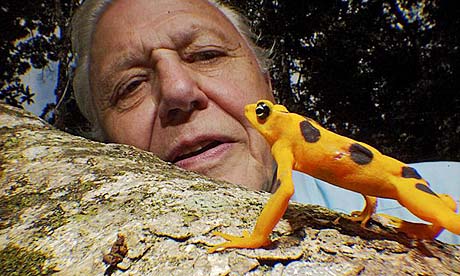
The search for the Golden Toad is underway in Costa Rica, where concerned scientists are looking to find this rare toad to aid in its conservation.

Inaction towards Climate Change is becoming a Human Rights issue according to Oxfam, who believe that people living in the poorest countries are suffering for the lack of environmental action by richer, more developed countries (who are also those contributing most to pollution). With floodings in the UK at an all-time high it's clear even without Oxfam's suggestion that it's long time we engaged in preventing climatic changes.

Britain's native seahorses are at risk and urgent action is needed according the The Seahorse Trust. It is believed that the site at risk is the only one in Britain where both indigenous seahorse species - the Spiny and the Short Snouted - are known to be breeding.


Climate change may be bringing even bigger waves to Australian shores. Although this is obviously of concern to coastal settlements and their environments, it is noted that this increasing surf may benefit schemes to harness the power of the ocean for greener electricity.
Climate change seems high priority in various news feed at the moment with increasingly extreme weather conditions and it's not just our native seahorses who are suffering: walruses, Beluga Whales, Polar Bears and the elusive Narwhal were all noted this week to be at risk.

Dire weather across Britain this Summer has had a drastic effect on the honey harvest according to beekeepers. Winter viruses nd rainy weather have kept the bees hive-bound resulting in greater colony death and honey harvest levels lower than beekeepers would ever have expected.

Do you have any news you'd like to share? Please leave a link in your comment.

Thursday, 4 September 2008

A Few Fabulous Frogs!

I just came across this great collection of short clips about frogs in Costa Rica and had to share it: Enjoy!

Wednesday, 3 September 2008

Big Cat Live


With so much going on in the world of Natural History media at the moment I've been having difficulty deciding what to post on first!

If you're in any way interested in wildlife television you should be aware of the new live multimedia project the BBC is preparing to launch later this year: Big Cat Live.

Big Cat Live is going to be in a similar format to the groundbreaking project "Springwatch" which first aired in 2005. Springwatch involved (and involves) an overview of live camera feeds from nest boxes and animal burrows, allowing us to follow stories of British wildlife. Its huge success with viewers here in the UK has been partly due to the way in which they were able to follow wildlife in their own back gardens and feedback to the programme online.

Big Cat Diary (which preceded Springwatch) and Elephant Diary also highlight the way in which these programmes engage viewers by following individuals of a species.
I think it's something to do with human empathy. We are drawn into stories when we start to become familiar with and care for the individuals involved. Thus, viewers are encouraged to tune in to find out how that batch of coal tits or those young lion cubs are doing. It's similar to our affinity for sitcoms and series such as Neighbours - we want to know what's happening in their lives next!

Springwatch was highly ambitious in relying on participation from the public to look out for their local wildlife and aid in the wildlife surveys conducted; but most notably it was a pioneer in multimedia effort. Springwatch on television ran in conjunction with an online British wildlife survey and programmes on Radio 2 and Radio 4 as well as providing an online blog and online live feeds from selected cameras.

Big Cat Diary is possibly the BBC Natural History Unit's biggest venture yet. Live feeds from cameras strategically placed across Kenya's Masai Mara reserve will be brought to us here in the UK on our screens. Aside from the obvious difficulties with streaming live content reliably across the world on the presenters' cue, this project will also attempt to bring 24hour surveillance to its website for the superkeen to access!

Big Cat Live intends to give the public a lot more behind the scenes footage to envelope us into the project itself. There'll be an interactive website available two weeks before the launch, and the three week long event will run in conjunction with a programme on CBeebies (Little Big Cat) although unfortunately there does not appear to be any Radio production planned. Obviously most of us won't be able to follow the species in our own back yards, but the programme will bring us an overview of daily life on the reserve with information on the activities of a wide variety of species; and unlike Springwatch, Big Cat Live's feeds will continue streaming beyond daylight hours for more exciting behaviours!

To me the technology involved for the video streaming across the world is enough of an obstacle, but if you think about it the programme will face many other hurdles!
...

For one, lions and antelope and hyaenas don't breed as often and regularly as the birds we see on springwatch and have much wider territories: we can't simply slot a camera into a cheetah's den to see how the cubs are doing.

Two: A bird's daily life involves much flitting and feeding, whereas a lion spends about 20hours of the day resting!

Three: This is no sofa-in-Norfolk jobby (Springwatch reference!)! Kate Silverton, Simon King, Jonathon Scott and presumably a whole host of production team fellahs will be spending the duration of the programme in the heart of an African reserve! Just think of the health and safety issues!

It's going to be a huge challenge for all involved at the BBC and I can't imagine any other production company or channel being able to host something at this scale. The BBC say it's a test-run for future 360-degree productions to see if their technology is robust enough to move to the next level. I for one can't wait for Autumn!


(BBC Press Release. Big Cat Live is to be produced by Colin Jackson, series producer Nigel Pope.)
 
Top of Page