Showing posts with label David Attenborough. Show all posts

Monday, 23 February 2009

Review: BBC Wildlife Magazine March 2009 Issue

If you're a regular follower of GiantsOrbiting and its themes, I hope you are also aware of the spectacular periodical embracing all things relating to Natural History that is, BBC Wildlife Magazine.
BBC Wildlife Magazine has moved from strength to strength since it was founded in 1963 as Animals Magazine. Amongst its array of impressive advisors are included David Attenborough (Planet Earth, Nature’s Great Events), Jane Goodall (The Jane Goodall Institute), Simon King (Big Cat Live) and Stephen Moss (Springwatch and A Guide to Garden Birds).

The BBC Wildlife Magazine March 2009 issue is, true to form, another wonderful exploration into wildlife behaviour and imagery; from stunning freeze-frame photography to insightful ideas for your bookshelf and fascinating examination of behaviour. In this issue discover the dynamics of a great white shark attack (Image: Chris Fallows), learn how to distinguish between many different common caterpillars, ascertain how to trap slugs using beer and take note of the best wildlife television offerings in March.

When you have contained your excitement and settled down to read, turn to page 68 for a wonderful guide to attracting birds to your garden (Image: Chris O'Reilly). Written by Steve Harris of Bristol University this article is one of many found in this issue that gives you advice on how to engage with nature where you are!

This is, in my opinion a hot topic of the moment. The ever popular Springwatch and Autumnwatch series have been great catalysts for focussing the public eye back on our British Wildlife. The BBC (amongst other production groups) is now churning out fantastic programmes such as It’s not Easy Being Green and Wild About Your Garden; programmes designed to help you bring wildlife to your doorstep and create a symbiotic relationship with the environment. And you don’t need a huge garden to do it!
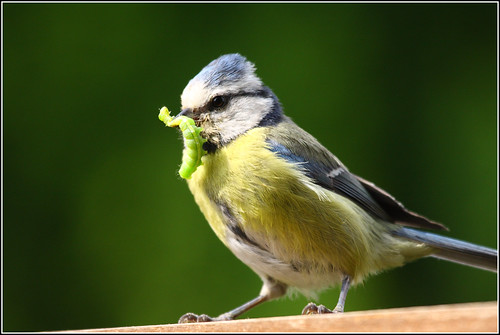
How to...Attract birds to your garden by Steve Harris describes how to source your seeds, make birds feel at home and monitor the changes you’ve instigated in your new bird haven. Birds, besides being beautiful to watch and pleasant to listen to, are also helpful pollinators and pest-deterrents (Image: David F) and you may find that their presence improves your garden flora.
It is important that your garden meets the needs of the birds throughout the year if you are to encourage them to be regular visitors, but this can be compensated for by putting fat blocks out during the winter, buying substandard cast-off apples for when your trees are out of fruit and planting a range of seasonal shrubs and trees.
And it’s not just food that birds require. We all know the excitement of seeing birds collect for their young in spring, so put out a nestbox now while the birds are seeking shelter and you may find yourself witnessing the young’s first flight in the summer.

Some birds prefer to forage on the ground and some at the birdfeeder but all are vulnerable to predators. Almost all animals must find a balance between feeding and being vigilant against attack whilst foraging: By keeping your feeders in a position where birds can see predators such as cats or sparrowhawks (Image: Duncan Carrier) coming, you will be ensuring that your garden provides a place where birds feel safe and are sure of a good meal.
They’ve thought of everything from deterring squirrels to avoiding the spread of disease by sterilising feeders regularly. This is a comprehensive and thorough guide to attracting birds to your garden and if you turn to page 82 you’ll discover more about the birds that may soon be reaching the British shores from across the world.

In next month’s issue the BBC Wildlife team review whether Grow-Your-Own Butterfly kits actually work, and teach us skills to help us sneak up on Wildlife for a better look!
If you want a copy of BBC Wildlife magazine it will cost you £3.45 per issue. Alternatively a year’s subscription is £31.20 saving you over a pound per issue and delivery is free to the UK.

If you want to learn more about how to create a place for wildlife in your garden or near you take a look at the Breathing Places website.

Saturday, 14 February 2009

BBC News: Remarkable footage of the elusive Narwhal

A BBC team used aerial cameras to film the creatures during their epic summer migration, as they navigated through cracks in the melting Arctic sea ice.

Narwhal are sometimes called "Arctic unicorns" because of the long, spiral tusk that protrudes from their jaws.
The appendages can reach more than 2m (7ft) in length; scientists believe males use them to attract potential mates.

Narwhal: Unicorn of the Arctic
'An amazing sight'
The BBC crew headed to the Arctic in June 2008, to film the tusked animals' summer migration.

At this time of year, temperatures begin to rise above freezing and the thick sea ice starts to melt, creating a complex network of cracks that cover the white expanse.

These animals are just so completely unreal - they are like something from mythology
Justin Anderson, BBC producer

Every year, thousands of narwhal use these narrow fissures to travel thousands of kilometres, from the south of Baffin Bay to the high Arctic fjords.

But tracking these animals down is not easy.

Justin Anderson, who produced the programme, said: Even though they are quite large animals, the area we had to cover was enormous - the size of Scotland.

It is like finding a needle in a haystack.

A "dive" crew, equipped with underwater cameras, spent four weeks on the ice trying to locate the mysterious whales. But just as they caught a glimpse of them, the sea ice had become so dangerously thin that filming was forced to halt.

However, an "aerial" team arrived by helicopter to take up the mantle.

Mr Anderson explained: It took us seven days to travel to the place where the whales had been spotted [Lancaster Sound] - we were stuck by possibly the worse thing you can encounter in a helicopter in the Arctic - fog.
But then we got there, we 'lucked out'; the skies cleared and we had eight days of 24-hour summer sunshine.


Using a special mount, cameraman Simon Werry filmed the creatures from the helicopter, as the narwhal swam through the melt-water leads.

Mr Anderson said: This is the first time the narwhal migration has been filmed this way. It has been filmed from the ice, but this is the first time it has been filmed from the air.

It was an amazing sight. These animals are just so completely unreal - they are like something from mythology - and we were all just completely gobsmacked when we saw them.

Thanks to their elusive nature, narwhal can prove difficult to study and there is still much to learn about these Arctic mammals.

With such a connection to the Arctic ice, researchers are trying to establish whether narwhal will be affected by changes in the Arctic ice cover.

Dr Heide-Jorgensen has been using satellite tags, which, as well as keeping track of the whereabouts of narwhal, are also able to monitor the temperature of the waters where the whales swim.

He said: They give us the temperature profiles in the wintering grounds and we can see the temperature of the deep areas has been increasing over the past 50 years.
However, we cannot yet see any direct effects of climate change on the narwhal.


From BBC News by science reporter Rebecca Morelle

Nature's Great Events: The Great Melt is on Wednesday 11 February on BBC One at 2100 GMT

Tuesday, 3 February 2009

Darwin's Struggle: The Evolution of the Origin of Species

As many of you are aware the BBC is dedicating a series of television and radio programmes to the 200th anniversary of Charles Darwin's birth and the 150th anniversary of the publication of 'On the Origin of Species', under the title
Doubtless many of you will have watched David Attenborough's Charles Darwin and the Tree of Life on BBC1 last Sunday night at 9pm, and if not you can still catch it on the BBC iPlayer. This programme gives us a brief overview of Darwin's life's work interspersed with much library footage showing the young David Attenborough's discoveries of the same patterns in nature. It covers arguments for and against theories of natural selection and evolution, and takes us on a journey through evolution from single-celled organisms up to the top shoots of the tree of life, and all with some very snazzy graphics!

However, more fascinating, I found was the rigorous exploration of Darwin's life leading up to his great works as is conveyed through Darwin's Struggle: The Evolution of the Origin of Species.

Jeremy Bristow's production gives us a brutally accurate description of the truly tragic life Charles Darwin lead: His family touched by the tragedies of the deaths of three of his children finally causing him to lose his faith and to damn religion... The influence of his daughter Anne's death on chapter 3 of On the origin of species as he sees the face of nature stricken as her face was with the struggle to survive...
His concern for his wife Emma's fear that he will be damned to hell.

It is easy to forget, amongst visions of his great works and great voyages that Charles Darwin was a man leading a man's life with all the pressures we experience today and more. His personal growth is almost as amazing as the theories it precedes.

Darwin's Struggle unravels myths surrounding the roots of his theories, noting, for example, the overstated significance of the Beagle voyage from which his natural history collections were in fact meagre and badly classified. His true epiphanies appear to take place not in some glamourous exotic country but in the chalk banks and unmown lawns of his Kentish home. Simple experiments he conducted recording survivors and losers in the struggle for existance in patches of grass gave the strongest base to his hypotheses. He even wondered at his own children whom he considered in relation to orangutans in the zoo. His exploration of artificial selection through pigeon breeding, laws defining hive structure from bee keeping, and complexities amongst barnacles all seem to have been overlooked by the media in the past.

Terrified of the reception of his book Darwin lived through years of torment and self doubt. Losing himself in research, desperate to shield his theory from anticipated criticisms Darwin endured years of secrecy only to become distraught at the possibility of his work being undercut by that of Alfred Wallace: All my originality smashed.

Eventually Darwin published his book only highlighting the effects of his theories on species and avoiding the implications of the origins of mankind; but these implications were not lost on his close teacher and mentor Adam Sedgewick who brutally denounced his work in a devastating letter to him.

He was open to vast ridicule from religious leaders as well as devout christian scientists of the time.

Darwin's Struggle: The Evolution of the Origin of Species is a fascinating exploration of the life-long torment which lead to one of the most important theories in science today. One of the most honest portrayals of Darwin to date, I'd recommend anyone interested in his great works to watch Darwin's Struggle and learn about the true evolution of the origin of species.

You can watch Darwin's Struggle on the iPlayer until Monday the 9th February and it will also air again tonight (Tuesday 3rd) at 7.30pm on BBC4.

Darwin's Struggle was produced by Jeremy Bristow of the BBC's Natural History Unit.

Monday, 2 February 2009

David Attenborough on Charles Darwin and the Tree of Life


You can watch Charles Darwin and the Tree of Life on the BBC iPlayer until 10pm on Sunday the 18th February.

Saturday, 29 November 2008

Natural World: Cheeky Monkeys


You simply have to get onto the iPlayer and watch Natural World's Cheeky Monkey episode Clever Monkeys!

Narrated by David Attenborough, this Natural World gem intends to explore how monkeys throughout the world should challenge our perceptions of what it is to be human.
From our ability to hold images in our minds to our capacity for language, it seems that somewhere in the world one of our cousins will have mastered the same!

Some astonishing stories have been dug up here from the Marmosets farming sap from trees to the White-faced capuchins cracking clams open and using their tails as sponges to soak up rainwater from inside tree trunks.

There is also some world class footage from close-up facial expressions to stunning wide angle views, and the first few minutes' editing and music build a wonderful cheeky start to the programme.

I do have to note that there are occasional over-anthropomorphic assumptions made. I did find myself grinding my teeth as some very selective editing suggested that a group of macaques were feeling sad at the loss of their leader, and I found myself very grumpy with Mr. Attenborough when he suggested that a "clever" monkey had mastered the lie when in fact he was most likely merely mastering a situation of cause and effect.


No great conclusions should be made about monkey "intelligence" from the programme but it is fantastically researched and really delightful to watch. A valuable addition to the NHU archives, so long as the BBC sell it for what it is: a lovely collection of interesting behaviours and a glimpse of how some of our great accomplishments as humans might have began.

Natural World's Clever Monkeys, first broadcast on BBC2, is available to view online until Tues December 16th and was co-produced by the BBC and Thirteen/WNET New York.

Related posts: Oceans Outrage, Killer Whales in the UK?, Wildscreen

Thursday, 23 October 2008

Wildscreen 2008 Panda Awards

And the winners are...

BBC NEWCOMER AWARD: The White Wood
Filmmaker: Lou Astbury (UK)

CAMPAIGN AWARD: Rethink the Shark
Save Our Seas Foundation (Switzerland) Co-produced with Saatchi & Saatchi

UWE CHILDREN’S CHOICE AWARD: Bama’s Journey
Commissioned by Al Jazeera International

PRESENTER-LED AWARD: Adventure Yukon: The Long Journey
Studio Hamburg Produktion GmbH/NDR Naturfilm (Germany) Co-produced with Parthenon Entertainment and ORF
Presenter: Andreas Kieling

FIVE AWARD FOR POPULAR BROADCAST PROGRAMME: Meerkat Manor: Journey’s End
Southern Star International (Australia) An Oxford Scientific Films production for Animal Planet International


EARTH SCIENCE AWARD: Earth: The Power of the Planet – Atmosphere
BBC (UK) Co-produced with National Geographic US, ZDF & BBC Worldwide

NEWS AWARD: China’s Killer Zoos
Sky News (UK)

ARKIVE NEW MEDIA AWARD: Earth-Touch weekly podcast
Earth-Touch (South Africa)

PARTHENON ENTERTAINMENT AWARD FOR INNOVATION: Smalltalk Diaries: Predators
Ammonite Ltd (UK) Co-produced with the BBC in association with Off the Fence and Big Squid New Media

WILDSCREEN’S AWARD TO PROMOTE FILMMAKERS FROM DEVELOPING COUNTRIES: Irani Wildlife
Seyed Mani Mirsadeghi (Iran)

GRANADA AWARD FOR ANIMAL BEHAVIOUR: Eye of the Leopard
Wildlife Films (Botswana)

NATURAL HISTORY MUSEUM ENVIRONMENT AWARD: Battle to Save the Tiger
Mike Birkhead Associates (UK) Commissioned by BBC Natural History Unit

THEATRICAL AWARD: The Theatrical Award was not presented this year. After much deliberation the judges did not feel that this year’s finalists met the criteria of the award, and so have not put forward a winner.

ANIMAL PLANET INTERNATIONAL PEOPLE AND ANIMALS AWARD: Saving Luna
Mountainside Films Ltd (Canada) Commissioned by CBC

CHRISTOPHER PARSON’S AWARD FOR OUTSTANDING ACHIEVEMENT: Masaru Ikeo – Executive Officer, Business Development, Media International Corporation
(Formerly of NHK, Japan)

BEST EDITING AWARD: Expedition Guyana (Programme 1)
BBC Natural History Unit (UK) Co-produced with BBC Worldwide & Discovery
Editor: Peter Brownlee

FILMS AT 59 AWARD FOR BEST SOUND: Galapagos: Born of Fire
BBC Natural History Unit (UK) Co-produced with BBC Worldwide & National Geographic US

BEST SCRIPT AWARD: Saving Luna
Mountainside Films Ltd (Canada) Commissioned by CBC
Scriptwriter: Michael Parfit

BEST MUSIC AWARD: Christmas in Yellowstone
Thirteen/WNET New York (USA)
Music: Lenny Williams

Disappointment for the crew of Life in Cold Blood as Smalltalk Diaries takes their only nomination...
BEST SERIES AWARD: Smalltalk Diaries
Ammonite Ltd (UK) Co-produced with the BBC in association with Off the Fence and Big Squid New Media

PANASONIC AWARD FOR CINEMATOGRAPHY: Earth Pilgrim
AGB Films Ltd (UK) Co-produced with BBC Natural History Unit & BBC Worldwide
Camera: Warwick Sloss

JURY’S SPECIAL PRIZE: Lobo – The Wolf that Changed America
Brian Leith Productions (UK)
A BBC and Thirteen/WNET New York co-production in association with PBS
Scriptwriters: Steve Gooder & Brian Leith

GOLDEN PANDA: Life in Cold Blood - Armoured Giants
BBC Natural History Unit (UK) Co-produced with BBC Worldwide, Animal Planet & the Open University.

Tuesday, 21 October 2008

Wildscreen Volunteering Uncut: Day 3

Tuesday

Research Workshop
Tigress APs and researching gurus Laura Harvey and Natalie Dunmore led this workshop on production research.
With information on the role of a researcher, where to find ideas, fact cross-checking, phone call checklists, handling cold contacts and logistics, this is by far the most thorough workshop I've attended this year.
Laura and Natalie, a highly approachable pair, have over 10 years in the industry between them and were absolute fountains of knowledge when discussing production research.
Outsiders approaching the industry may find it difficult to fathom the actual day-to-day duties and pressures of specific roles in film-making: I left this workshop excited, with a clear concept of what is required of me if I am to push myself into the researcher role.


Masterclass: Sound - The Cinderella Craft

This afternoon masterclass session featured advice from experts Martyn Harries (BBC Dubbing Mixer), Kate Hopkins (Freelance Dubbing Editor), Joe Stevens (BBC Sound Recordist) and Patrick Morris (BBC Producer).
Now I don't know much about sound but after just an hour of intense listening, I was intrigued. I had no idea how a soundtrack was put together, who would be involved in the process and where soundbites might come from, never mind which microphones are used for what and that sounds obtained can influence the footage used as well as vice versa.
Patrick Morris described a fantastic example of where a recording of locals singing about a bird's behaviour was built upon to produce a soundtrack which changed the entire format of a visual sequence - and with a beautifully moving result.

This evening's debate upon whether "People must be kept away from endangered animals" saw intriguing arguments from both sides. The conclusive vote turned in favour of the motion with 205 votes for verus 132 against.

Sunday, 19 October 2008

Wildscreen Volunteering Uncut: Day 2

Monday


Today I was scheduled in to be on the front desk for Workshops. Whilst some of these are based off-site around Bristol, most take place in the Marriot Royal Hotel conference rooms.

The first was "Breaking out of the box: A guide to multi-platforming" run by Paul Williams (BBC NHU researcher and founder of TheNatureWatch.com) with guest speakers Paul Deane (Senior Content Producer: Big Cat Live) and Jody Bourton (Radio AP: World on the move, BBC Wales).


This was a fantastic hands-on workshop directed at those new to the world of blogging, RSS feeds, youtube, flickr, twitter and all manner of online content outlets! This was perfect for many of the delegates attending this workshop but a bit basic for me so, as with many aspects of a volunteer's duties, I ended up assisting with the activities being run.
It was easy to be reassuring and helpful as, having only started blogging a few months ago myself, I know how daunting HTML and other gadget codes can be, and how easy it is to find online advice. There are even blogs about blogging!

Importantly it was noted at the beginning of the session that the BBC's use of the phrase "Multiplatforming" tends to apply to all web-related content. Paul Deane, Senior Content Producer for Big Cat Live took us through the BBC's use of online feeds, blogs and video uploads for the Big Cat Live event, focussing on the importance of a community feel for the success of such programmes. With Twitter technology the Big Cat Live team could text in their latest news as it happened...

Wow - we've just had the most amazing lion kill live on webcam1. Sorry we pulled away - it was getting quite gory. Anything could happen!
Big Cat Live Twitter feed

Jody Bourton, Assistant producer for Radio 4's World on the Move discussed the benefits of small camcorder video feeds from the field and gave us tips on directing our videos to be suitable for the web. We were given a chance to try our hand at this and told to concentrate on framing and lighting, being careful to keep shots simple for faster uploads. The results can be found at the Wild Wildscreen Website.


Monday's evening event was the Parthenon Party, with a Russian theme: Pictures coming soon!

Saturday, 18 October 2008

Wildscreen Volunteering Uncut: Day 1!

Sunday

Wildscreen is upon us!

A volunteer's day starts early. You will never see the Clifton Triangle or Park street looking this quiet at any other time of week but Sunday morning!


My first duty of the week? Registration desk! This is where it all begins for delegates attending Wildscreen and it's really important that they get given all the right information and literature, and there's a lot!


From 9am every morning a delegate's first view of Wildscreen will always be a smiling volunteer and the following thrust into their arms...

1. Delegate badge: VITAL! Without this the delegates can't get into the Watershed to enjoy all the festival events and activities. There's usually a dashing photo or two with the occasional celebrity who needn't be pictured because everyone will know them. This year's white space faces include Sir David Attenborough, Bill Bailey and Joanna Lumley!!

2. Invites envelope: This has all their evening event tickets including those to the prestigious Panda awards, that is, providing they've bought one. All the other evening events are free to delegates but for the Pandas there are limitted spaces, invites only!

3. Wildscreen bag: This is a classic eco-friendly shoulder-bag containing their Wildscreen goodies; including pens made from recycled car parts, USB sticks, notepads, sweeties, sponsor literature, maps, the festival diary, and the much sought delegate directory. The delegate directory lists all the films submitted to Wildscreen with those nominated for awards highlighted and gives every delegate's contact details, so when you bump into that life-changing career-making producer, you know you'll be able to get hold of him or her, with just a flick of the fingertips!

4. Directions: This is an obvious one! Wildscreen film festival is spread across various areas of Bristol with many workshops being off-site. Delegates will need to know either where they can meet their guide to a workshop or how to get there themselves. And of course volunteers are always giving directions to the nearest toilets!

5. A Buddy!: Wildscreen has had the great idea of helping newcomers to find their way around and kickstart their networking by introducing them to a buddy. Buddies have to be pre-booked in order to match up pairs but there can be the occasional delegate loitering at the registration desk hoping to just sign up!

Being on the registration desk is great fun! You get to meet loads of people on whom you will automatically make a good impression, and there's usually a few who like to know your name or are keen to take a business card!

"Oo she sounds useful - are we short a runner? We should get her in for some work experience!"

Tomorrow I'm on workshops: Multi-Platforming and Managing Production...stay tuned!

Thursday, 16 October 2008

Wildscreen Volunteering Uncut: Day -2!

Thursday

A visit to the Wildscreen office this afternoon found me in the company of the Wildscreen Festival Heroes all working hard and late into the evening!

Volunteering at Wildscreen is an amazing opportunity to hobnob with the best in the wildlife filmmaking business and to learn about working in the industry. It's an opportunity not to be taken lightly and one for which I am truly grateful!
For this reason you frequently find volunteers spending the days prior to the festival in one of the Wildscreen meeting rooms getting repetitive strain injuries as they do the fill-in jobs that the festival managers simply do not have the time for.

My festival diary starts in this meeting room where I spent but a few hours putting delegate invitations into their welcome packs, ordering these packs for registration and stapling together volunteer guides.
There's so much happening at the festival: the coordinators need to be sure that the volunteers will represent their presence throughout; checking that delegate-only rules are applied, health and safety issues are sustained, and talks and workshops are run smoothly.

It's a large amount of paperwork that the festival coordinators get through but I am reassured that numerous recycling bins are placed around the festival to make sure we don't waste this paper - they've thought of everything!

I stay until just before 8pm (having only arrived around 5) but the office is still busy and bustling when I leave.

I can't wait for the festival to commence!!!

Wednesday, 15 October 2008

' Twas the week before Wildscreen...

Wildscreen Film Festival is fast descending on Bristol and we mustn't forget its focus. The Panda awards are known as the Green Oscars and represent the cream of the crop from the natural history filmmaking industry.


New to the awards this year we have the Natural History Museum Environment Award, the Animal Planet International People & Animals Award and the Presenter-led Award.
If it wasn't for this event we couldn't have imagined the leaps and bounds this industry has taken to be possible.

Time and time again we see the BBC Natural History Unit raise the bar for wildlife filmmaking with pioneer blue-chip programmes and unique multi-media ventures, but without this review of their competition would they push so hard and so far? Would their competitors have been left straggling behind?

Here's a quick look at the BBC NHU entries to the Panda Awards this year.

Extreme Animals: Sports Stars has been nominated for the UWE Children's Choice Award. Extreme Animals: Sports Stars examined who would win the race to be the tip top fastest fittest animal from ten contenders. Although the fastest animal is the Peregrine Falcon, reaching speeds up to 200km/h, the Cheetah took the top position!

Galapagos: Born of Fire is up for the Panasonic Award for Cinematography for its spectacular images of outstanding natural beauty and the camerawork that brought them to the public eye. This Award actually marks the competition between three nominees all produced or co-produced by the BBC NHU: one of which involves co-production with previous Panda Award stars Halcyon media. Wye: Voices from the Valley has similar undercurrents and tone to the award-winning My Halcyon River which wowed the judges at Wildscreen 2004, and, like Galapagos: Born of Fire, was nominated for both best cinematography and the Films @59 Award for Best Sound.

Expedition Guyana (Programme 1) is a hopeful nominee for the Best Editing Award. Expedition Guyana followed a group of adventurers and scientists into the unexplored depths of the jungle to seek out new species and behaviours. The team made exciting discoveries and conquered dangerous landscapes to make this fantastic programme but the editors had to wade through hundreds of hours of footage and reduce them to a few succinct episodes!

Buddha, Bees and the Giant Hornet Queen, one episode of an outstanding Natural World series by the BBC, is up for the Parthenon Entertainment Award for Innovation. This programme shows the unique and mysterious connection between a monk, his bee colony and the hungry killer hornet army that amasses on his doorstep. Definitely a strong contender for this award and definitely worth finding on DVD or borrowing from your local video library.

Elephant Diaries (programme 4) has been nominated for the Five Award for Popular Broadcast Programme. The diary format is one with which we are all familiar and the recent successes of the BBC NHU with Big Cat Diary demonstrates how popular their work in this genre will continue to be. Competitors in this category are up against the best in the business!

Life in Cold Blood: The Cold-Blooded Truth is a strong nominee for Best Series Award. What would a Panda Award ceremony be without David Attenborough? And yet they may find themselves pipped to the post by Ammonite Ltd's fantastic series Smalltalk Diaries which makes up for in character, what it lacks in cinematography.

All in all this year's nominees represent the consistently improving quality of Wildlife film being churned out around the world. Without Wildscreen we couldn't qualitatively scrutinise such programmes to push them forward in their own creativity; and without the BBC's NHU who would set the bar to get the rest of the industry to keep their socks pulled up?!

Tuesday, 14 October 2008

Wildscreen Volunteer Diary

With the Wildscreen Film Festival fast approaching GiantsOrbiting is bringing you an insight into what goes on behind the scenes where the real heroes of Wildscreen work.

As a volunteer you have access to almost every area of Wildscreen from cinema screenings to the celebrity green room, from workshops to the watershed cafe, from the registration desk to the prestigious Panda Awards!

Sir David Attenborough with volunteers Jonas Stenstrom and Samantha Dixon at the Panda Awards 2006.

Nikki Waldron (volunteer coordinator) is responsible for making sure the 30 strong volunteer team maintain order at the festival to keep it running smoothly. The volunteers must man events, screenings, talks and workshops and check that only those who've paid (dearly!) for the Festival's activities are permitted. Nikki is there to ensure that the excited volunteers keep to their schedules and ensure an enjoyable event for all.

Wildscreen Film Festival is a whirlwind adventure for everyone especially the volunteers! Keep an eye on GiantsOrbiting to find out all about the goings on behind the scenes for the Wildscreen 2008 volunteers.

Saturday, 30 August 2008

Life In Cold Blood

I have to say one of the most exciting things I've ever seen was the clip in a Life in Cold Blood episode which I had been a part of filming. You see last year (after much begging) the brilliant Paul Williams, researcher for the BBC's Life in Cold Blood, invited me along to Failand studios for a few days to assist with filming.

To be brutally honest probably the most aid I provided was holding the waterspray to ensure the frogs were kept moist! We were trying to get a shot of this beautiful green frog landing on a leaf for a clip which would be played in slow motion:

For those of you who might have an inkling toward feeling cheated when you discover that some shots aren't taken in the wild, firstly imagine yourself in a humid climate being supped upon by leaches and ticks holding a camcorder which must not get moist and pointing it at a leaf in the hope that a frog might just come along and pick your leaf to land on... and secondly let me tell you that we stood there for two hours trying to get the perfect shot! It's no easy feat even when it is staged! And of course lets remember that importantly we're not faking unnatural behaviour; we're pretty sure that scientists have established that frogs land on leaves!
**NB: The BBC also has a very open policy where such filming is necessary - just look at Planet Earth's extras and those at the end of episodes in the Galapagos series!

Now I'm no professional cameraman so I was very excited when they did consider my idea of panning out and cutting the shot around whichever leaf the frog chose to land on (because it never bloody seemed to be our leaf!), BUT these BBC cameramen are perfectionists! Firstly they emphasised that they were shooting in HD (High Definition) and with a cut shot the quality would be reduced, and secondly no, they had set up the lighting perfectly for that leaf, they had a highly professional assistant spraying it evenly to keep it moist (yours truly) and it simply would not do for our friend to land on a poorly lit leaf. This is what is known as audience loyalty. These guys spend hours perfecting things so that the 3second shot is absolutely spot on for you, the viewer!
If you do see Life in Cold Blood: Land Invaders, note that in the shot between 20.59 - 21.25 minutes the frog take off was beautiful: given how long we had to wait hoping the frog would get the urge to leap I'm glad it was well worth it!

I do think Life in Cold Blood is an amazing program but it isn't without its limits. I suppose it may be a personal preference of my own that I like programs where you are given a chance to follow a story through completely. The nature of such immensely factual programs as Life in Cold Blood means that there is an inevitable tradeoff between showing the complete story of each behaviour and showing as many different behaviours as possible.
I did feel that some stories in the series are cut off a tad short but (without sounding too BJohnson) I don't presume to have greater editting skills than those giants at the BBC and I can't imagine looking at twenty odd hours of film with the task of cutting it down to just one hour!

So I suggest you do get onto the BBC iPlayer and watch whichever episode they're currently showing, because at the very very least it's a fascinating example of brilliant filmmaking, and there's a handy exerpt at the end of each episode to tell you how some of it's done!

Friday, 29 August 2008

David Attenborough

Like anyone interested in Wildlife and the media I'm naturally a fan of David Attenborough's work.

I'm fortunate enough to have met him once or twice as well and can tell you he's a really friendly man and he loves a glass of red!

This clip on youtube I think is a good representation of his character. He's openly passionate about wildlife and not afraid of making fun of himself... if only the commissioners would let him show it, imagine the programs we could be watching!

Jonathon Ross meets David Attenborough
 
Top of Page