Showing posts with label Review. Show all posts

Monday, 23 February 2009

Review: BBC Wildlife Magazine March 2009 Issue

If you're a regular follower of GiantsOrbiting and its themes, I hope you are also aware of the spectacular periodical embracing all things relating to Natural History that is, BBC Wildlife Magazine.
BBC Wildlife Magazine has moved from strength to strength since it was founded in 1963 as Animals Magazine. Amongst its array of impressive advisors are included David Attenborough (Planet Earth, Nature’s Great Events), Jane Goodall (The Jane Goodall Institute), Simon King (Big Cat Live) and Stephen Moss (Springwatch and A Guide to Garden Birds).

The BBC Wildlife Magazine March 2009 issue is, true to form, another wonderful exploration into wildlife behaviour and imagery; from stunning freeze-frame photography to insightful ideas for your bookshelf and fascinating examination of behaviour. In this issue discover the dynamics of a great white shark attack (Image: Chris Fallows), learn how to distinguish between many different common caterpillars, ascertain how to trap slugs using beer and take note of the best wildlife television offerings in March.

When you have contained your excitement and settled down to read, turn to page 68 for a wonderful guide to attracting birds to your garden (Image: Chris O'Reilly). Written by Steve Harris of Bristol University this article is one of many found in this issue that gives you advice on how to engage with nature where you are!

This is, in my opinion a hot topic of the moment. The ever popular Springwatch and Autumnwatch series have been great catalysts for focussing the public eye back on our British Wildlife. The BBC (amongst other production groups) is now churning out fantastic programmes such as It’s not Easy Being Green and Wild About Your Garden; programmes designed to help you bring wildlife to your doorstep and create a symbiotic relationship with the environment. And you don’t need a huge garden to do it!
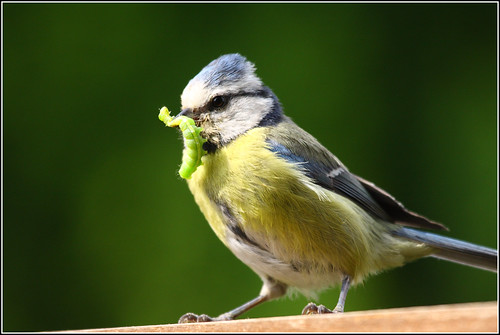
How to...Attract birds to your garden by Steve Harris describes how to source your seeds, make birds feel at home and monitor the changes you’ve instigated in your new bird haven. Birds, besides being beautiful to watch and pleasant to listen to, are also helpful pollinators and pest-deterrents (Image: David F) and you may find that their presence improves your garden flora.
It is important that your garden meets the needs of the birds throughout the year if you are to encourage them to be regular visitors, but this can be compensated for by putting fat blocks out during the winter, buying substandard cast-off apples for when your trees are out of fruit and planting a range of seasonal shrubs and trees.
And it’s not just food that birds require. We all know the excitement of seeing birds collect for their young in spring, so put out a nestbox now while the birds are seeking shelter and you may find yourself witnessing the young’s first flight in the summer.

Some birds prefer to forage on the ground and some at the birdfeeder but all are vulnerable to predators. Almost all animals must find a balance between feeding and being vigilant against attack whilst foraging: By keeping your feeders in a position where birds can see predators such as cats or sparrowhawks (Image: Duncan Carrier) coming, you will be ensuring that your garden provides a place where birds feel safe and are sure of a good meal.
They’ve thought of everything from deterring squirrels to avoiding the spread of disease by sterilising feeders regularly. This is a comprehensive and thorough guide to attracting birds to your garden and if you turn to page 82 you’ll discover more about the birds that may soon be reaching the British shores from across the world.

In next month’s issue the BBC Wildlife team review whether Grow-Your-Own Butterfly kits actually work, and teach us skills to help us sneak up on Wildlife for a better look!
If you want a copy of BBC Wildlife magazine it will cost you £3.45 per issue. Alternatively a year’s subscription is £31.20 saving you over a pound per issue and delivery is free to the UK.

If you want to learn more about how to create a place for wildlife in your garden or near you take a look at the Breathing Places website.

Tuesday, 3 February 2009

Darwin's Struggle: The Evolution of the Origin of Species

As many of you are aware the BBC is dedicating a series of television and radio programmes to the 200th anniversary of Charles Darwin's birth and the 150th anniversary of the publication of 'On the Origin of Species', under the title
Doubtless many of you will have watched David Attenborough's Charles Darwin and the Tree of Life on BBC1 last Sunday night at 9pm, and if not you can still catch it on the BBC iPlayer. This programme gives us a brief overview of Darwin's life's work interspersed with much library footage showing the young David Attenborough's discoveries of the same patterns in nature. It covers arguments for and against theories of natural selection and evolution, and takes us on a journey through evolution from single-celled organisms up to the top shoots of the tree of life, and all with some very snazzy graphics!

However, more fascinating, I found was the rigorous exploration of Darwin's life leading up to his great works as is conveyed through Darwin's Struggle: The Evolution of the Origin of Species.

Jeremy Bristow's production gives us a brutally accurate description of the truly tragic life Charles Darwin lead: His family touched by the tragedies of the deaths of three of his children finally causing him to lose his faith and to damn religion... The influence of his daughter Anne's death on chapter 3 of On the origin of species as he sees the face of nature stricken as her face was with the struggle to survive...
His concern for his wife Emma's fear that he will be damned to hell.

It is easy to forget, amongst visions of his great works and great voyages that Charles Darwin was a man leading a man's life with all the pressures we experience today and more. His personal growth is almost as amazing as the theories it precedes.

Darwin's Struggle unravels myths surrounding the roots of his theories, noting, for example, the overstated significance of the Beagle voyage from which his natural history collections were in fact meagre and badly classified. His true epiphanies appear to take place not in some glamourous exotic country but in the chalk banks and unmown lawns of his Kentish home. Simple experiments he conducted recording survivors and losers in the struggle for existance in patches of grass gave the strongest base to his hypotheses. He even wondered at his own children whom he considered in relation to orangutans in the zoo. His exploration of artificial selection through pigeon breeding, laws defining hive structure from bee keeping, and complexities amongst barnacles all seem to have been overlooked by the media in the past.

Terrified of the reception of his book Darwin lived through years of torment and self doubt. Losing himself in research, desperate to shield his theory from anticipated criticisms Darwin endured years of secrecy only to become distraught at the possibility of his work being undercut by that of Alfred Wallace: All my originality smashed.

Eventually Darwin published his book only highlighting the effects of his theories on species and avoiding the implications of the origins of mankind; but these implications were not lost on his close teacher and mentor Adam Sedgewick who brutally denounced his work in a devastating letter to him.

He was open to vast ridicule from religious leaders as well as devout christian scientists of the time.

Darwin's Struggle: The Evolution of the Origin of Species is a fascinating exploration of the life-long torment which lead to one of the most important theories in science today. One of the most honest portrayals of Darwin to date, I'd recommend anyone interested in his great works to watch Darwin's Struggle and learn about the true evolution of the origin of species.

You can watch Darwin's Struggle on the iPlayer until Monday the 9th February and it will also air again tonight (Tuesday 3rd) at 7.30pm on BBC4.

Darwin's Struggle was produced by Jeremy Bristow of the BBC's Natural History Unit.

Monday, 5 January 2009

Radio 4's Darwin: In our Time

In celebration of the 200th anniversary of the birth of Charles Darwin, and the 150th anniversary of the publication of 'On the Origin of Species', the BBC is airing a season of landmark TV and radio programmes under the title Darwin: The genius of evolution.


This week Radio 4 presents the series Darwin: In our Time which began today with the first programme On the Origin of Charles Darwin. Melvyn Bragg talks to Darwin biographer Jim Moore, UCL geneticist Steve Jones and Christ's College fellow David Norman, as well as college librarian Colin Higgins; to uncover Darwin's personal evolution from childhood through to Cambridge graduate.


The first in this series leads us through Darwin's troubled upbringing as the fifth child of a large and well-off family, to his escape from Edinburgh University after failing a medical degree, and on to his life at Cambridge training to be a clergyman, where he would be seemingly unimpressive at his studies.

Darwin entered Cambridge with every intention of becoming a clergyman of the Church of England, which would necessitate his signing of the 39 articles of the Church in order to graduate. Biology at this time was not much more than stamp collecting, and Darwin's beetle collection was one he took great pride in.
We learn of Darwin's development from mere beetle-watcher to entemologist to theoreticist; all while he takes on University life: tapping into his father's wallet, running up bills and skipping lectures to pursue vices such as drinking and shooting.

The Christ's College library gives us insight into his personal growth through a vast collection of correspondances between Darwin and his close friend and cousin William Darwin Fox. We hear too of Darwin's university role-model, Professor Henslow, who introduced Darwin to plants and “Ecology” and opened his eyes to the presence of patterns in nature.

The programme also takes a geographical perspective leading the presenters and listener around the common haunts of Darwin's student life.

The Darwin: In our Time series promises to be a fascinating journey through what was a very difficult time for such revolutionary ideas.

The next in this series will see Darwin journey to South America on the Beagle voyage and will be broadcast on Radio 4 at 9am on Tuesday 6th January.

You can listen to Darwin: In Our Time: On the Origin of Charles Darwin online with the BBC iPlayer until next Monday, and further programmes in the series will also be available on the iPlayer over the next few weeks.

One to watch: Darwin's Struggle: The Evolution of the Origin of Species will be showing on BBC4 at 9pm on 2nd February. Produced by Jeremy Bristow of the BBC Natural History Unit.

Saturday, 29 November 2008

Natural World: Cheeky Monkeys


You simply have to get onto the iPlayer and watch Natural World's Cheeky Monkey episode Clever Monkeys!

Narrated by David Attenborough, this Natural World gem intends to explore how monkeys throughout the world should challenge our perceptions of what it is to be human.
From our ability to hold images in our minds to our capacity for language, it seems that somewhere in the world one of our cousins will have mastered the same!

Some astonishing stories have been dug up here from the Marmosets farming sap from trees to the White-faced capuchins cracking clams open and using their tails as sponges to soak up rainwater from inside tree trunks.

There is also some world class footage from close-up facial expressions to stunning wide angle views, and the first few minutes' editing and music build a wonderful cheeky start to the programme.

I do have to note that there are occasional over-anthropomorphic assumptions made. I did find myself grinding my teeth as some very selective editing suggested that a group of macaques were feeling sad at the loss of their leader, and I found myself very grumpy with Mr. Attenborough when he suggested that a "clever" monkey had mastered the lie when in fact he was most likely merely mastering a situation of cause and effect.


No great conclusions should be made about monkey "intelligence" from the programme but it is fantastically researched and really delightful to watch. A valuable addition to the NHU archives, so long as the BBC sell it for what it is: a lovely collection of interesting behaviours and a glimpse of how some of our great accomplishments as humans might have began.

Natural World's Clever Monkeys, first broadcast on BBC2, is available to view online until Tues December 16th and was co-produced by the BBC and Thirteen/WNET New York.

Related posts: Oceans Outrage, Killer Whales in the UK?, Wildscreen

Saturday, 22 November 2008

Oceans Outrage: viewers are "patronised" and "pissed off" by the new mega series!


A recent glance at one of my favourite blogs The Nature Watch showed that some bloggers are overwhelmingly unhappy with the BBC's latest mega-series Oceans.

Described as "a classy documentary" by the Sunday Telegraph, "a shimmering series" by The Sun and "top aqua totty!" by Radio 4, Oceans promised to take us on an exploration of "some of the planet's most challenging environments" following "intrepid adventurers", but after reading the comments on the Nature Watch's spiel you might not be so sure!

Former newspaper journalist blogger Lunartalks gives a wholeheartedly different view of the series. Lunartalks reviews the series with a refreshingly colloquial yet intelligent and rigidly honest tone and I'd thoroughly recommend giving it a read! From the viewpoint of one with a "passionate" love of the Yorkshire coastline it would appear that the BBC has seriously wronged locals by hollywoodising their home environments with patronising and irrelevant stories. Lunartalks notes that his home-stretch of coast is malresearched; its gripping heritage of "James Cook, villages sliding into the sea on storm blasted nights, smuggling, ...the first German plane shot down over Britain... sunken u-boats,... Jurassic fossils, Jack Lammiman,...Dracula, ... Viking invasion, ... tales that old fisherman can tell of rowing off a lee shore for hours until their bones showed through their palms" and many many more, all neglected in the series.

And it isn't just a single blogger insulted by the "self loving" presenters: Karen James (beagle blogger), is furious at the hypocrisy of "presenters trying to pose adventurously on the bow of a big fat diesel spewing thing cruising at top speed across the waves" whilst preaching about climate change; Kevin Z (marine researcher) labels it an indicator of the BBC's "decline in quality"; and nature forums aren't much better. Birdforum reader ghostrider objects to the "dumbed-down" information, the use of the phrase "ground-breaking photography" to describe "fishing for squid and then diving with a camera" and the progression towards "I'm a Celebrity diver, get me on camera"! Adey Baker notes that "this type of programme (does) try to make heroes out of people doing their job rather than the results of that job" and deals too much with "all the problems of the members of the group" rather than "creatures of the deep".We all know reality TV is a hit but should we have to expect it from the blue-chip-famous BBC natural history unit?
When Lunartalks describes "the gender-balanced, UK ethnically selected team of presenters", I can't help but sense a line-up for Big Brother, and even internet writers who enjoyed the series have noted that having "super good looking people in it..helped".

On the other side of the coin Peewit (forum writer) found the presentation "heart-felt" and "insightful" and commends the 'adventurers' for "risking their lives...for filming purposes"; and as with almost any BBC NHU output there are tv reviewers suggesting that "if your sea legs are steady and strong, (Oceans) is your idea of viewing bliss".

All-in-all opinions are obviously personal and you should foster some of your own by watching Oceans online. From my viewpoint the reality-tv style of programming which we are seeing more and more is not attractive when thrust into the natural history world. For example Pacific Abyss is a disgustingly over-sensational programme described rightly by The Mirror as "abyssmal"(!)
Anna Lowman (TV scoop writer) notes that this style of programming has become "a trend ever since Planet Earth started having those ten "making of" minutes at the end of the programme" and believes it "takes the magic away".
I must finish with her eloquent statement that these programmes risk "trying to be too many things to too many people - extreme sports junkies, environmentalists, history lovers, wildlife enthusiasts - and in doing so, don't really satisfy any of their intended audiences."

Related posts: Wild:Killer Whales in the UK?, Pushing it too far..., Life in Cold Blood faking it

Wednesday, 19 November 2008

Will Work for Nuts from the Wildscreen Film Festival

Wildscreen Film Festival nominee "Will Work for Nuts" was high on my list of must-sees since I found out the reason for the presence of a two foot peanut at the Panda awards!

Will Work for Nuts was a collaborative effort from Tigress Productions based in Bristol, Five UK and BDH. From programme to programme we see animals' natural abilities put to the test in creative, fun and exciting ways.

The first episode documented the first bee race ever followed shortly by goldfish football (You may need to install the latest version of Flash to view this clip).


Presenters Lloyd Buck, Matt Thompson and James Cooper are querky michievous animal-lovers out to show what their favourite furry, feathery and otherwise fabulous friends can do.

Lloyd, the cheeky Essex lad, is a bird trainer who considers himself the equivalent of a mate to his pet golden eagle and enjoys putting his phenomenally fast falcons to the test.


Joker Matt has a background in wildlife tv production and seems to prefer the hard way when it comes to up-close encounters with bird-feeders disguising himself as a bin to get a camera-phone shot of a bluetit.

James is a mischievous Techy who finds ingenious ways to tackle the wild including inventing a self-taking bird feeder cam and creating digitally altered human bird song.


Episodes tested the reaction times of the fastest bird on the planet, the peregrine falcon, the possibility of birdwatching using your mobile phone and the bizarre concept of an eagle lie detector. However, my favourite and one of the most ingenious ideas was that of human birdsong. The boys slowed down a recording of wren song by 1000 times to approximately human voice frequency. They then sang along to this recording their efforts, and sped it back up to bird frequency...result? Human birdsong! No experiment is complete without a realistic test: they crept up on a hide full of seasoned birdwatchers and played their effort. Amazingly the birdwatchers identified the song as that of a wren - Brilliant!


You can find out more about Will Work for Nuts on the BDH website and Five's blog. There are currently no plans to schedule repeats but some Will Work for Nuts clips are available on youtube if you missed it.

You can also buy the show's book at Amazon.com for just a fiver!
And watch Matt's hilarious response to being a runner-up at the Pandas on youtube.

Related posts: Wildscreen 2008 Panda Awards

Tuesday, 28 October 2008

Autumnwatch 2008


It's started! Love-him-or-hate-him Bill Oddie and glowing BBC icon Kate Humble returned to our screens last night for the opening of Autumnwatch 2008.

Having just had one of the coldest Summers in years, some of us may feel cheated at how soon Autumn seems to have arrived, but the Autumnwatch team have already been hard at work for weeks preparing our new Autumn adventures for the screen!

Based at Brownsea Island, home to one of the last groups of red squirrels in the British Isles, Autumnwatch 2008 is promising to take us on a journey through the season's true wild mysteries unravelling stories on land and beneath the surface fo the oceans around Britain. For a start we'll be following the Autumnwatch squirrel challenge as the crew attempts to find out if the Red Squirrel can compete with the grey's famous agility and cunning.

Simon King has returned to us from the Masai Mara to take on the much less dangerous challenge of examining the rutting and lekking behaviours of the beautiful fallow deer population at Petworth. Last night we learned that a single male may mate with up to 15% of the females in the population. Using the Big Cat Live technology we saw images of the deer at night from the infra-red cams and followed them into the dawn to examine how and why a single male can be so successful! Simon tells us it all comes down to stamina(!) and we should stay tuned for more from Britains beautiful deer populations.

The lovely Gordon Buchanan has been struggling his way out to the Farne Islands to check up on the grey seals out there whose freshly born pups are learning to suckle and of course to cope with the elements. These pups will have to become completely independent in just three weeks in order to cope with the loss of thir parents to the annual migrations. Autumnwatch are promising us serious drama from the grey seal populations where the pups are at the most vulnerable time of their lives.

Another exciting first, we'll be seeing reptilian behaviours this Autumnwatch as Dorset is home to all six of the UKs native reptiles...and some invaders!

TUNE IN TONIGHT for a look at the famous Hannibal the cannibal barn owl as well as some amazing slow motion footage from the bird feeder cameras.

If you want to get involved in Autumnwatch check out the Autumnwatch website, at which you can upload your own footage of Autumnal behaviours, chat on the messageboards about your sightings and even contribute your photos to their Flickr group.
Missed an episode?! You can catch last night's Autumnwatch now on the BBC iPlayer.

Thursday, 23 October 2008

Wildscreen 2008 Panda Awards

And the winners are...

BBC NEWCOMER AWARD: The White Wood
Filmmaker: Lou Astbury (UK)

CAMPAIGN AWARD: Rethink the Shark
Save Our Seas Foundation (Switzerland) Co-produced with Saatchi & Saatchi

UWE CHILDREN’S CHOICE AWARD: Bama’s Journey
Commissioned by Al Jazeera International

PRESENTER-LED AWARD: Adventure Yukon: The Long Journey
Studio Hamburg Produktion GmbH/NDR Naturfilm (Germany) Co-produced with Parthenon Entertainment and ORF
Presenter: Andreas Kieling

FIVE AWARD FOR POPULAR BROADCAST PROGRAMME: Meerkat Manor: Journey’s End
Southern Star International (Australia) An Oxford Scientific Films production for Animal Planet International


EARTH SCIENCE AWARD: Earth: The Power of the Planet – Atmosphere
BBC (UK) Co-produced with National Geographic US, ZDF & BBC Worldwide

NEWS AWARD: China’s Killer Zoos
Sky News (UK)

ARKIVE NEW MEDIA AWARD: Earth-Touch weekly podcast
Earth-Touch (South Africa)

PARTHENON ENTERTAINMENT AWARD FOR INNOVATION: Smalltalk Diaries: Predators
Ammonite Ltd (UK) Co-produced with the BBC in association with Off the Fence and Big Squid New Media

WILDSCREEN’S AWARD TO PROMOTE FILMMAKERS FROM DEVELOPING COUNTRIES: Irani Wildlife
Seyed Mani Mirsadeghi (Iran)

GRANADA AWARD FOR ANIMAL BEHAVIOUR: Eye of the Leopard
Wildlife Films (Botswana)

NATURAL HISTORY MUSEUM ENVIRONMENT AWARD: Battle to Save the Tiger
Mike Birkhead Associates (UK) Commissioned by BBC Natural History Unit

THEATRICAL AWARD: The Theatrical Award was not presented this year. After much deliberation the judges did not feel that this year’s finalists met the criteria of the award, and so have not put forward a winner.

ANIMAL PLANET INTERNATIONAL PEOPLE AND ANIMALS AWARD: Saving Luna
Mountainside Films Ltd (Canada) Commissioned by CBC

CHRISTOPHER PARSON’S AWARD FOR OUTSTANDING ACHIEVEMENT: Masaru Ikeo – Executive Officer, Business Development, Media International Corporation
(Formerly of NHK, Japan)

BEST EDITING AWARD: Expedition Guyana (Programme 1)
BBC Natural History Unit (UK) Co-produced with BBC Worldwide & Discovery
Editor: Peter Brownlee

FILMS AT 59 AWARD FOR BEST SOUND: Galapagos: Born of Fire
BBC Natural History Unit (UK) Co-produced with BBC Worldwide & National Geographic US

BEST SCRIPT AWARD: Saving Luna
Mountainside Films Ltd (Canada) Commissioned by CBC
Scriptwriter: Michael Parfit

BEST MUSIC AWARD: Christmas in Yellowstone
Thirteen/WNET New York (USA)
Music: Lenny Williams

Disappointment for the crew of Life in Cold Blood as Smalltalk Diaries takes their only nomination...
BEST SERIES AWARD: Smalltalk Diaries
Ammonite Ltd (UK) Co-produced with the BBC in association with Off the Fence and Big Squid New Media

PANASONIC AWARD FOR CINEMATOGRAPHY: Earth Pilgrim
AGB Films Ltd (UK) Co-produced with BBC Natural History Unit & BBC Worldwide
Camera: Warwick Sloss

JURY’S SPECIAL PRIZE: Lobo – The Wolf that Changed America
Brian Leith Productions (UK)
A BBC and Thirteen/WNET New York co-production in association with PBS
Scriptwriters: Steve Gooder & Brian Leith

GOLDEN PANDA: Life in Cold Blood - Armoured Giants
BBC Natural History Unit (UK) Co-produced with BBC Worldwide, Animal Planet & the Open University.

Monday, 6 October 2008

Big Cat Live: On your screens now!


Big Cat Live leapt onto our screens last night with an introduction to the presenters, the cats and the local wildlife we'll be following over the next few weeks.

I hope I speak for many when I say that after seeing her out of her usual habitat I'm reassured that Kate Silverton will do Saba proud as the new presenter on the savannah!

You can watch last night's show online here and stay tuned for episode 2 tonight at 7.30 on BBC1.

Monday, 29 September 2008

A Guide to Garden Birds : Brett Westwood, Radio 4


Having just moved house and not yet installed my TV, I have been getting my wildlife fix from the BBC iPlayer and my usual radio programmes.

Fortunately (unlike for TV) much radio content is available to us online indefinitely, so long as you have the right software to download and play it.

I am a particular fan of Radio 4's content: Radio 4 replaced the BBC Home Service in the 60s and today broadcasts a very wide variety of programmes from various genres including science and nature. It can be found around 92-95 FM and is the BBC's most expensive network. It's also one of its most successful, winning the Sony Radio Academy Award's "UK Station of the year" this year.

For wildlife programmes Radio 4 is your one-stop shop! Amongst my favourites are Scars of Evolution presented by David Attenborough, World on The Move following worldwide animal migrations, and A Year in the Life of Ants which was partly presented by my current postgrad tutor, the brilliant Nigel Franks. All of these are available to listen to by download and take barely any time to obtain.

"A Guide to Garden Birds" aired in conjunction with Springwatch 2008 and was, in my opinion, one of the most complete and well-presented programmes I have ever heard. Now this may have been achieved through its simplicity as a programme: Brett Westwood and his sound recordist Chris Watson enter Stephen Moss' garden where they sit and chat with him and listen to the birds.
Episodes alternate between bird groups, covering the Titmice, Thrushes, Finches and many more; and Brett and Stephen (pictured) lead the listener through each song and bird including clever anecdotes to help you learn to identify the species. As if this wasn't enough, they also throw in some handy hints on how to identify the birds by sight in your garden, and indicate how each species behaves and how this will affect your birdwatching.

I will attempt to describe some of the best (and my favourite) anecdotes that this lovely programme uses, but to truly appreciate it, I would urge you to get online and download a few for yourself. They're all of 20 minutes long and make very easy listening.

Episode one sees Brett and Stephen discussing the Song Thrush (picture by Bob Glover) and Stephen recalls how his grandfather Snowy, used to be followed home by the call of a bird that nagged him singing "Snowy, Snowy, Snowy. Pay the rent, pay the rent, pay the rent!" Ever since hearing this I have yet to fail to recognise the Song Thrush by ear.

In episode two we hear how the Blue Tit is a bold little bird that literally puts "all his eggs in one nest". The Blue Tit, it appears, lays up to 12 eggs only once in the nesting season whereas most other birds will lay 3 or 4 a few times. The Blue Tits have to work hard to keep 12 hatchlings fed and a breeding pair will bring around ten thousand caterpillars to the nest per day!

Did you know?: The Long-tailed Tit has the shortest body of any British bird (that is of course once we've excluded the tail)!

The blackbird, we are told, has a "fruity" song which we may hear at the first signs of spring. As a woodland bird, it has a particularly loud call which would have been necessary to attract a mate through the dense forest; of course now we find their song carries so well through our streets and gardens that when we expect it to be very close we may find they are halfway down the end of the street.

For amateur twitchers A Guide to Garden Birds is a godsend. Discover more anecdotes for yourself at A Guide to Garden Birds' website.

As mentionned above, A Guide to Garden Birds is just one of the many fantastic radio outputs of the BBC's Natural History Unit. At the moment you can follow worldwide animal migrations with Radio 4's "World on the Move" on Tuesday mornings.

For the truly keen you can revise what you have discovered at Brett's birdsong library, also a useful tool for identifying songs you've heard recently without having to go through the programme.

(N.B. You may need the RealPlayer to play your downloaded radio programmes. You can download RealAlternative for free here).

Tuesday, 16 September 2008

AMAZON: The Adventures of Bruce Parry

My favourite Pub Quiz is run every Monday at 9pm at the Jersey Lily pub here in Bristol but last night I was just too ill to go, so I turned to my television.

I watched the very posh Valentine Warner emphasize that he's never been more at home than with the most Welsh sheep farmer I've ever seen, before demonstrating how best to shoot a rabbit for the pot and how to cook the perfect pork chop. What to Eat Now kept me very entertained and left me wondering where the divide is drawn between cookery documentary and natural history programme.

I pondered away through the BBC2 ads and then was awoken from my trance by the opening scenes from "AMAZON with Bruce Parry". I remembered vaguely hearing of such a programme being on the cards and settled further into the settee...

AMAZON is to be a 6 part series following explorer Bruce Parry (best known for hosting Tribe) from the official source of the Amazon at Nevado Mismi in the Andes of Peru to its end at the Atlantic coast of Brazil.

Episode 1 was simply fantastic!
Bruce started out at the source and then trekked the 6hours to the nearest settlement of Quechua llama herders. We then follow him as he learns their way of life from llama shearing to their deep connection to Pacha Mama the "mother earth". His hosts, the family headed by Rodolfo are a generous and selfless people who despite their harsh way of life seem so content. My favourite scene shows their youngest, the boy Icka (above) spontaneously hugging Bruce before performing a little dance around the workers.
So overwhelmingly caring are these people that after only a few days they are visibly shaken to see him go and send him off with tears and prayers for him on his journey.

Bruce then takes on the treacherous upper waters of the Amazon with a group of daredevil white water rafters before heading downstream for a more relaxing break with the Coca farmers who can't afford not to sell their produce to the cocaine refiners. He sees the conflict between those who must make cocaine to survive and those who enforce the law from both sides, and actually takes part in the refining process before jumping in the back of a machine-gun-bearing truck to try to track down others doing the same. He meets villages that fight the cocaine makers and some who embrace them as desperate survivors. Some portray teenagers wondering around with guns protecting their land with their families.

During this episode the director Matt Brandon falls ill demonstrating how isolated the filmmakers actually are as they desperately attempt to get him to hospital. Fortunately he later made a full recovery but I found myself interested to see exactly how alone and in danger the crew are. It’s clear that many a big series such as Life in Cold Blood has filmmakers working in harsh and desolate conditions but more committed are those who must leave a village for fear of bringing war on their hosts.

It’s not often that I find myself completely engaged by a programme and interested enough to stay focussed through story after story. Frequently with programmes such as Pacific Abyss, in-filler shots and scenes seem to be used to make up the episode’s running time, causing the eye to wander or the viewer to amble off to put a brew on; AMAZON is no such programme. Get onto the iPlayer and watch the the first episode because it’ll be gone by next Monday’s pub quiz!

(AMAZON is co-produced by BBC Wales and Discovery Channel, and first aired on BBC2 on the 15th Sept '08; Producers: Steve Robinson and Matt Brandon.)

Tuesday, 9 September 2008

Last night's The One Show: Wildlife Police!

Last night The One Show took us to Stonehaven to visit the Grampian Police Wildlife Crime Officer.

David MacKinnon works full time to investigate possible crimes such as game poaching, "offenses against badgers and birds", hare coursing, poisoning, trapping, nest destruction, egg collecting...the list goes on and on. I think it's brilliant that every Scottish police force has a wildlife crime coordinater: Someone who keeps an eye on the human-wildlife interface to check that endangered species are protected.

The One Show had Miranda Krestovnikoff follow the story of a dead buzzard which had a cricular wound that might have been from a bullet (and was subsequently found to come under "natural causes"). Although The One Show had a giggle, the police are very serious and will actually send of samples to crime labs to check for poisoning.
Like in any crime investigation they look for motives amongst the human community: does the game breeder want rid of the Kite that hunts his pheasants? Is that local farmer having suspiciously fresh Salmon again?

It's quite clear how this benefits the wildlife but for those living in the community the Wildlife Police are also keeping their sites of outstanding natural beauty and special scientific interest safe and pristine. In my opinion it's highly valuable to have specific police to whom offenders are answerable. It represents a committment of the community to keep their environment healthy and should be commended.

I'm very glad The One Show found this worthy of the time. Good work chaps!

Tuesday, 2 September 2008

Wild: Killer Whales in the UK?

The series Wild is an almost bizarre mish-mash of half an hour and hour long programmes about various locations and species with "access to never-before seen footage".

It includes episodes about the "mysterious batwomen of Panama" who are in fact rather unmysteriously studying the bats and just happen to all be women; next to some brilliant presenting by Saba Douglas-Hamilton despite ironically discussing the terrors of poaching weaponry whilst wearing a leopard-print top. There's absolutely no connection between the episodes in locality, species, behaviour or presenting manner, but they are still quite fascinating in a kind of brief encounter "The One Show" style. The episodes presented by Saba and Gordon Buchanan are quite personal presenter-story led and include a bit more action on Saba's part (including her swimming through bat guano), as well as quite a bit more comedy on Gordon's.

For this reason in fact, I found my favourite to be "Killer Whales in the UK?" presented by Gordon. Gordon Buchanan started his career as a camera assistant to Nick Gordon who helped bring us the Life of Birds and The Heart of the Amazon. Gordon went on to be a big part of Big Cat Diary, The Natural World and Springwatch, and has evidently only recently come around to the idea of presenting.

Gordon's style of presenting is brilliant! He's very colloquial and chatty as we follow him to the Shetland Isles where he is to set up his "Killer Whale HQ" in a lighthouse. He has a lovely Scottish accent which is relatively rare in Natural History presenting and is refreshingly comical, and even slightly satirical: At one point he delights in the presence of inquisitive seals coming to meet him, as while they're looking at him a killer whale might come up, throw one of them in the air, kill it and eat it so he can catch it all on camera!

This episode is in fact all about Gordon: Gordon gets fed up waiting for the whales so he goes to visit some Puffins and attempts to woo them by copying their moaning sounds; Gordon gets attacked by gulls; Gordon flirts with the locals; Gordon gets bored of looking for killer whales so starts to sing and make seal sounds to keep his spirits up... and all of this is actually really good to watch! He's personable and fun and still gets across some interesting bits and bobs about wildlife too! It feels like he really is fascinated by the animals and it's nice to see things from a cameraman's perspective. He has to grab the right lens to see if a wild otter has caught something, and has to be careful when rushing to film a porpoise, that he gets his tripod set up safely!

There's also some cheesy pop played over the top to match his jovial manner such as Lionel Richie's "Hello, is it me you're looking for?" and Van Halen's "Jump!" to get guillemot chicks in the mood to leap a few hundred feet down a cliff before their swim to Norway! It's all good fun, although the story ends slightly disappointingly (I don't want to spoil it) and we get to see Gordon's motivation repeatedly rediscovered to the serenade of Blondie's "One way or another, I'm gonna find ya".

If you're a fan of British wildlife, which I hope you are, and you're in the mood for something lighthearted one evening, try to get hold of this episode because it really is a simple pleasure to watch! The only negative thing I'd say is that in terms of footage that's never been seen before it's one of the only episodes that's particularly lacking!

(Wild was produced by Tom Hugh-Jones and Chris Cole, and episodes are available to view on the BBC iPlayer alternately over the next few weeks.)

Saturday, 30 August 2008

Life In Cold Blood

I have to say one of the most exciting things I've ever seen was the clip in a Life in Cold Blood episode which I had been a part of filming. You see last year (after much begging) the brilliant Paul Williams, researcher for the BBC's Life in Cold Blood, invited me along to Failand studios for a few days to assist with filming.

To be brutally honest probably the most aid I provided was holding the waterspray to ensure the frogs were kept moist! We were trying to get a shot of this beautiful green frog landing on a leaf for a clip which would be played in slow motion:

For those of you who might have an inkling toward feeling cheated when you discover that some shots aren't taken in the wild, firstly imagine yourself in a humid climate being supped upon by leaches and ticks holding a camcorder which must not get moist and pointing it at a leaf in the hope that a frog might just come along and pick your leaf to land on... and secondly let me tell you that we stood there for two hours trying to get the perfect shot! It's no easy feat even when it is staged! And of course lets remember that importantly we're not faking unnatural behaviour; we're pretty sure that scientists have established that frogs land on leaves!
**NB: The BBC also has a very open policy where such filming is necessary - just look at Planet Earth's extras and those at the end of episodes in the Galapagos series!

Now I'm no professional cameraman so I was very excited when they did consider my idea of panning out and cutting the shot around whichever leaf the frog chose to land on (because it never bloody seemed to be our leaf!), BUT these BBC cameramen are perfectionists! Firstly they emphasised that they were shooting in HD (High Definition) and with a cut shot the quality would be reduced, and secondly no, they had set up the lighting perfectly for that leaf, they had a highly professional assistant spraying it evenly to keep it moist (yours truly) and it simply would not do for our friend to land on a poorly lit leaf. This is what is known as audience loyalty. These guys spend hours perfecting things so that the 3second shot is absolutely spot on for you, the viewer!
If you do see Life in Cold Blood: Land Invaders, note that in the shot between 20.59 - 21.25 minutes the frog take off was beautiful: given how long we had to wait hoping the frog would get the urge to leap I'm glad it was well worth it!

I do think Life in Cold Blood is an amazing program but it isn't without its limits. I suppose it may be a personal preference of my own that I like programs where you are given a chance to follow a story through completely. The nature of such immensely factual programs as Life in Cold Blood means that there is an inevitable tradeoff between showing the complete story of each behaviour and showing as many different behaviours as possible.
I did feel that some stories in the series are cut off a tad short but (without sounding too BJohnson) I don't presume to have greater editting skills than those giants at the BBC and I can't imagine looking at twenty odd hours of film with the task of cutting it down to just one hour!

So I suggest you do get onto the BBC iPlayer and watch whichever episode they're currently showing, because at the very very least it's a fascinating example of brilliant filmmaking, and there's a handy exerpt at the end of each episode to tell you how some of it's done!

 
Top of Page